Our countries


Europe
 Austria | Österreich
 Belgium | BelgiqueBelgium | België
 Bulgaria | България
 Croatia | Hrvatska
 Czechia | Česko
 Denmark | Danmark
 Estonia | Eesti
 Finland | Suomi
 France
 Germany | Deutschland
 Hungary | Magyarország
 Ireland | Éire
 Italy | Italia
 Latvia | Latvija
 Lithuania | Lietuva
 Netherlands | Nederland
 Norway | Norge
 Poland | Polska
 Portugal
 Romania | România
 Slovakia | Slovensko
 Slovenia | Slovenija
 Spain | España
 Sweden | Sverige
 Switzerland | SchweizSwitzerland | Suisse
 Turkey | Türkiye
 United Kingdom
Search
MONIER® Clay Tiles: Best Choice for Heritage Buildings in Malaysia
Share:
MONIER® Clay Tiles: Best Choice for Heritage Buildings in Malaysia | BMI
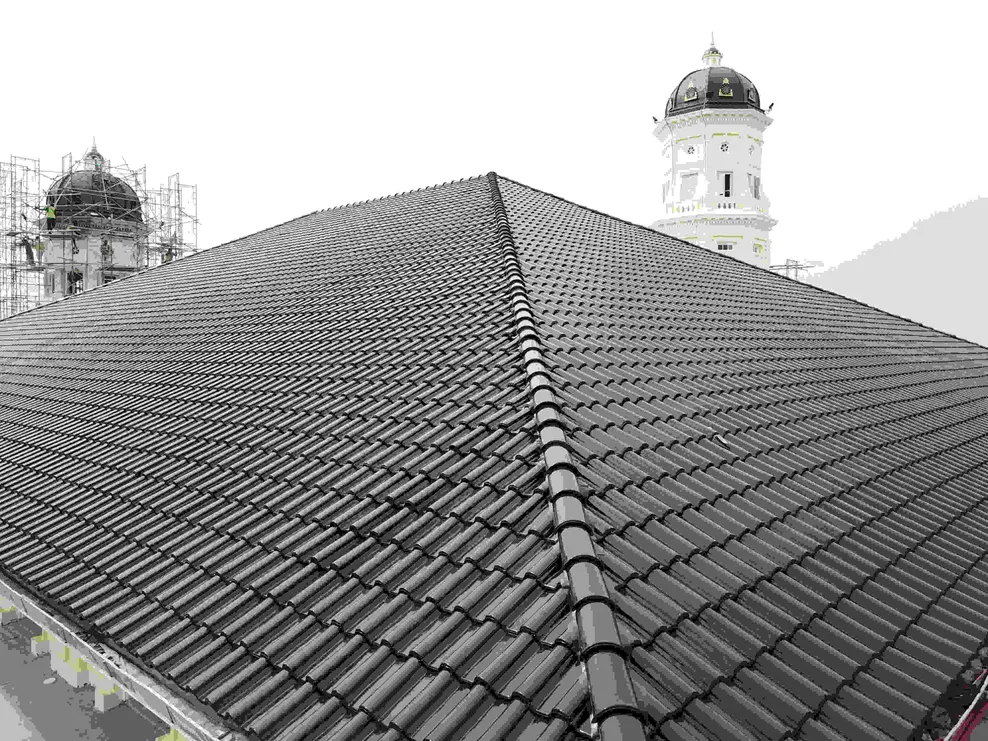
Malaysia's rich architectural heritage encompasses diverse traditions from the Malay vernacular kampung house and traditional Peranakan shophouses to colonial-era bungalows, Chinese temples, and civic buildings that reflect the country's multicultural history. These buildings share one common roofing material: clay tiles. Maintaining and restoring this heritage with authentic, high-quality materials is not merely an aesthetic choice, it is a conservation responsibility.
MONIER® clay tiles, produced under the BMI Group's commitment to quality and heritage compatibility, offer architects, conservation specialists, and building owners the material integrity required for sensitive heritage restoration work, combined with the technical performance expected of a modern roofing system.
Heritage Conservation in Malaysia: The Policy Context
Malaysia's heritage conservation framework is governed by the National Heritage Act 2005, which designates and protects listed heritage sites and sets requirements for the use of appropriate materials in conservation work. Local planning authorities in heritage-sensitive areas, particularly Penang's George Town (a UNESCO World Heritage Site), Malacca (also UNESCO listed), and Kuala Lumpur's heritage precincts, impose specific material and design requirements on roofing works within their jurisdictions.
In most heritage zones, clay tiles are either mandated or strongly preferred as the roofing material for conservation projects. Specifying alternative materials typically requires detailed justification to the relevant authority, and approval is not guaranteed. Using authentic clay tiles from the outset simplifies the regulatory process and ensures compliance with conservation standards.
Why MONIER® Clay Tiles Are Suited to Heritage Applications
Authentic Aesthetics
The visual character of clay tiles, their surface texture, colour variation, and profile geometry is fundamentally different from that of concrete tiles or synthetic alternatives. The subtle variation inherent in fired clay gives heritage roofscapes their characteristic warmth and depth. MONIER® clay tiles are manufactured to profiles and colour tones that are compatible with the historical tile types found on Malaysian heritage buildings, allowing new works to integrate sympathetically with existing fabric.
For conservation projects where a portion of original tiles must be replaced due to damage or failure, achieving a close aesthetic match is a primary concern. MONIER®'s range of clay tile profiles and colours provides the options needed to achieve a credible match in most heritage contexts.
Material Authenticity
Conservation philosophy, as articulated in international frameworks such as the Venice Charter and the Burra Charter, places a high value on the use of materials that are compatible with the original in terms of physical and chemical properties. Clay tiles are made from natural mineral materials that have been used on Malaysian buildings for centuries. Their compatibility with traditional lime mortars and their similar thermal expansion characteristics to the masonry structures they are installed on makes them technically appropriate for heritage buildings in ways that synthetic alternatives are not.
Long-Term Performance
Heritage building conservation is a long-term commitment. Materials used in conservation work should be durable enough to remain in service for many decades without requiring repeat intervention. Clay tiles' exceptional longevity with documented service lives exceeding 50 years, aligns with the conservation principle of minimising future interventions and preserving the building's fabric for the benefit of future generations.
Regulatory Compliance Support
BMI Group Malaysia's technical team has experience working with Malaysian local authorities and heritage bodies on roofing specifications for sensitive conservation projects. This includes providing material documentation, test data, and technical submissions to support planning and conservation authority approvals. Having a manufacturer partner with this experience streamlines the regulatory process for architects and building owners.
Key Specification Considerations for Heritage Roofing
Profile Selection
The selection of the correct tile profile is fundamental to achieving an authentic result. In Malaysia, the most common traditional profiles include the Peranakan 'Bibik' tile, S-tile variations used on colonial-era buildings, and flat profile tiles associated with Chinese-influenced vernacular architecture. Matching the profile of replacement tiles to existing originals requires careful measurement and comparison, and ideally a sample comparison assessment.
Colour and Surface
New clay tiles and weathered originals will not match immediately, clay tiles in service develop a patina over time through biological colonisation and surface weathering. Understanding this and selecting tiles whose base colour will blend acceptably with the existing weathered tiles is a skill that requires experience. Where a close match is critical, specialist conservation tile suppliers can provide samples from different production batches and clay sources to find the closest match.
Underlay and Accessory Specification
Heritage buildings frequently have roof structures built to construction standards of an earlier era, lighter timber framing, smaller batten sections, and different joist spacings than are standard in modern construction. The underlay and batten specification for a heritage re-roofing project must be matched to the carrying capacity of the existing structure, rather than simply applying modern standards without assessment.
Mortar and Bedding
Traditional clay tile installation used lime-based mortar for bedding ridge and hip tiles. Modern conservation practice generally recommends lime mortar over cement mortar for heritage buildings, as lime is softer and more permeable than Portland cement, reducing the risk of damage to the tile and masonry if differential movement occurs. This is a detail that a conservation-experienced installer will understand and implement correctly.
Case for Certified, Conservation-Experienced Installers
Heritage roofing work requires not just technical roofing skills but an understanding of conservation principles, careful handling of salvageable original materials, and sensitivity to the building's historical character. Engaging installers with documented experience in heritage roofing projects, ideally under the guidance of a qualified conservation architect, ensures that the work is carried out to the standard that Malaysia's heritage buildings deserve.
Conclusion
Malaysia's heritage buildings are irreplaceable assets, cultural, historical, and economic. Protecting them with materials that are authentic, durable, and technically appropriate is a responsibility that extends from building owners and developers through to architects, contractors, and material suppliers. MONIER® clay tiles, backed by BMI Group Malaysia's technical expertise and conservation experience, provide heritage building projects with the material quality and specification support they require.
For heritage roofing specifications, conservation authority submissions, and certified installer referrals, contact BMI Group Malaysia's team of roofing specialists.