Our countries


Europe
 Austria | Österreich
 Belgium | BelgiqueBelgium | België
 Bulgaria | България
 Croatia | Hrvatska
 Czechia | Česko
 Denmark | Danmark
 Estonia | Eesti
 Finland | Suomi
 France
 Germany | Deutschland
 Hungary | Magyarország
 Ireland | Éire
 Italy | Italia
 Latvia | Latvija
 Lithuania | Lietuva
 Netherlands | Nederland
 Norway | Norge
 Poland | Polska
 Portugal
 Romania | România
 Slovakia | Slovensko
 Slovenia | Slovenija
 Spain | España
 Sweden | Sverige
 Switzerland | SchweizSwitzerland | Suisse
 Turkey | Türkiye
 United Kingdom
Search
Roof Flashing Malaysia: Why It Matters and How to Choose the Right Type
Share:
Roof Flashing Malaysia: Why It Matters and How to Choose the Right Type
Of all the components in a roofing system, flashing is responsible for more leaks than any other single element. In Malaysia's tropical climate, with rainfall intensity among the highest in Asia and humidity that challenges every sealant and metal coating, choosing and installing the correct roof flashing is not a detail. It is a prerequisite for a watertight roof.
This guide explains what roof flashing is, why it is critical in the Malaysian context, the main types available, and how to select the right configuration for different roof conditions.
What Is Roof Flashing?
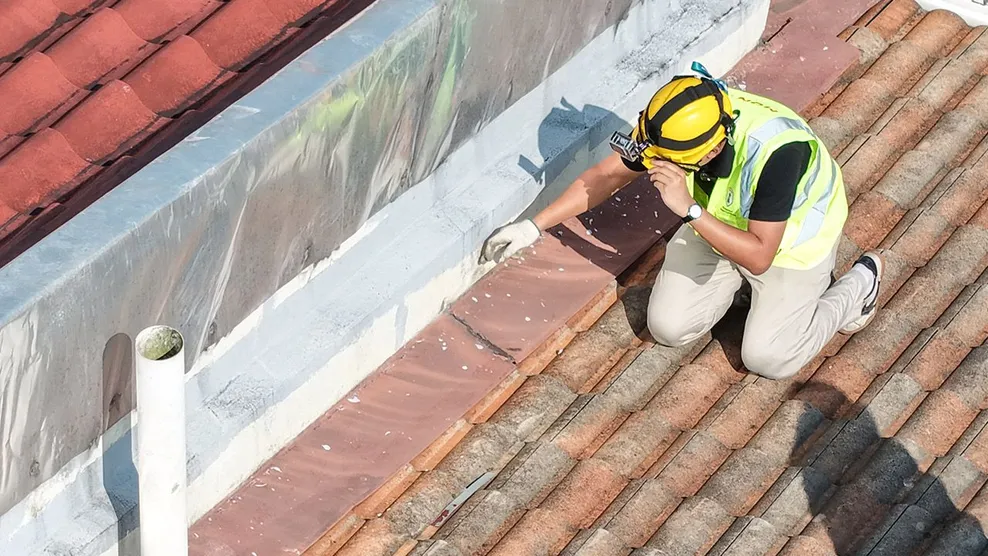
Roof flashing is thin sheet material, typically formed from metal or purpose-made polymeric composites, installed at the junctions between a roof surface and any vertical element it meets. These junctions include the intersections of a roof slope with a parapet or perimeter wall, around chimney stacks and flue penetrations, at dormer cheeks, around pipe penetrations for plumbing and mechanical services, and wherever two roof planes of different pitch or direction meet.
The function of flashing is to direct rainwater away from these structurally complex joints and channel it safely onto the main roof surface and into the guttering system. Without correctly installed and well-maintained flashings, every one of these junctions is a potential path for water to enter the building structure.
Why Flashing Failures Are So Common in Malaysia
The Malaysian construction industry sees a high incidence of flashing-related leakage for several interconnected reasons. First, flashings are often treated as an afterthought in project specification and budgeting, with contractors selecting the cheapest available material rather than one suited to the junction geometry and environmental conditions.
Second, the thermal cycling in tropical Malaysia is severe. Daytime roof temperatures can reach 70 degrees Celsius or above on an exposed metal surface, while night-time temperatures drop significantly. This expansion and contraction cycle, occurring daily over decades, stresses every rigid joint and eventually causes cracking and separation in poorly specified sealants or improperly overlapped metal sections.
Third, many Malaysian properties are located within 5 km of the coast, where salt-laden air accelerates corrosion of uncoated or inadequately coated metals at a rate several times higher than inland locations.
Types of Roof Flashing
Step Flashing
Step flashing is used where a sloped roof meets a vertical wall, such as the junction between a pitched roof and the side wall of a house or extension. Individual rectangular sections are interlaid with each course of tiles, stepping up the wall as the roof pitch rises. Step flashing is the standard detail for tile roofing at wall junctions in Malaysian residential construction.
Apron Flashing
Installed at the lower face of a chimney or upstand where it interrupts the roof slope, apron flashing is formed as a single sheet that runs beneath the tile course directly below the obstruction and turns up the face of the vertical element. It is then typically dressed with a cover flashing or counter flashing secured into a chase cut in the masonry.
Soaker Flashing
Soakers are concealed below tiles and are used in combination with cover flashings at abutments. Each soaker is positioned under one tile and turned up the wall, creating an interlocking series of small waterproof elements hidden from view. They are particularly relevant in heritage and conservation projects where visible flashing would compromise the aesthetics of the roofline.
Valley Flashing
Where two roof planes intersect at an internal angle, forming a valley, water from both slopes converges and flows down at higher velocity and volume. Valley flashing must be capable of handling this concentrated water flow. Options include open valleys with a wide metal tray, closed valleys where tiles are cut closely together over a concealed flashing membrane, and purpose-moulded GRP valley units sized to specific tile profiles.
Pipe and Penetration Flashings
Every pipe or duct that passes through a roof slope requires a weathertight seal around its penetration. Purpose-made lead-free pipe flashings with flexible skirts accommodate minor movement and resist UV degradation better than generic mastic sealants, which typically fail within five to ten years in the Malaysian climate.
Specifying Flashings for MONIER® Tile Systems
MONIER® supplies a range of proprietary flashing components designed and dimensioned to integrate with its tile profiles. System flashings ensure that the geometric relationship between the flashing and the tile edge is correct, eliminating the gaps and misalignments that occur when generic flashings are retrofitted to profiled tiles.
For RoofPro-certified installations, the use of MONIER®-specified flashing components at all junctions is a condition for the system guarantee. This provides building owners with assurance that junction waterproofing has been specified, installed, and warranted as part of a coherent system.
Maintenance of Flashings in Malaysian Homes
Even correctly specified and well-installed flashings benefit from periodic inspection. The Malaysian climate accelerates degradation of sealant compounds used at the upper edge of cover flashings. Property owners should arrange for a qualified roofer to inspect all flashing junctions every five years and before the monsoon season each year.
Key indicators of flashing failure include visible cracking or separation at sealant joints, rust staining below a flashing line, paint bubbling or blistering on interior walls adjacent to the roof junction, and water marks on ceiling boards directly below junction areas.