Our countries


Europe
 Austria | Österreich
 Belgium | BelgiqueBelgium | België
 Bulgaria | България
 Croatia | Hrvatska
 Czechia | Česko
 Denmark | Danmark
 Estonia | Eesti
 Finland | Suomi
 France
 Germany | Deutschland
 Hungary | Magyarország
 Ireland | Éire
 Italy | Italia
 Latvia | Latvija
 Lithuania | Lietuva
 Netherlands | Nederland
 Norway | Norge
 Poland | Polska
 Portugal
 Romania | România
 Slovakia | Slovensko
 Slovenia | Slovenija
 Spain | España
 Sweden | Sverige
 Switzerland | SchweizSwitzerland | Suisse
 Turkey | Türkiye
 United Kingdom
Search
Low-Pitched Roofs in Malaysia: Measuring, Calculating, and Installing the Right System
Share:
Low-Pitched Roofs Malaysia: Measuring, Calculating & Installing
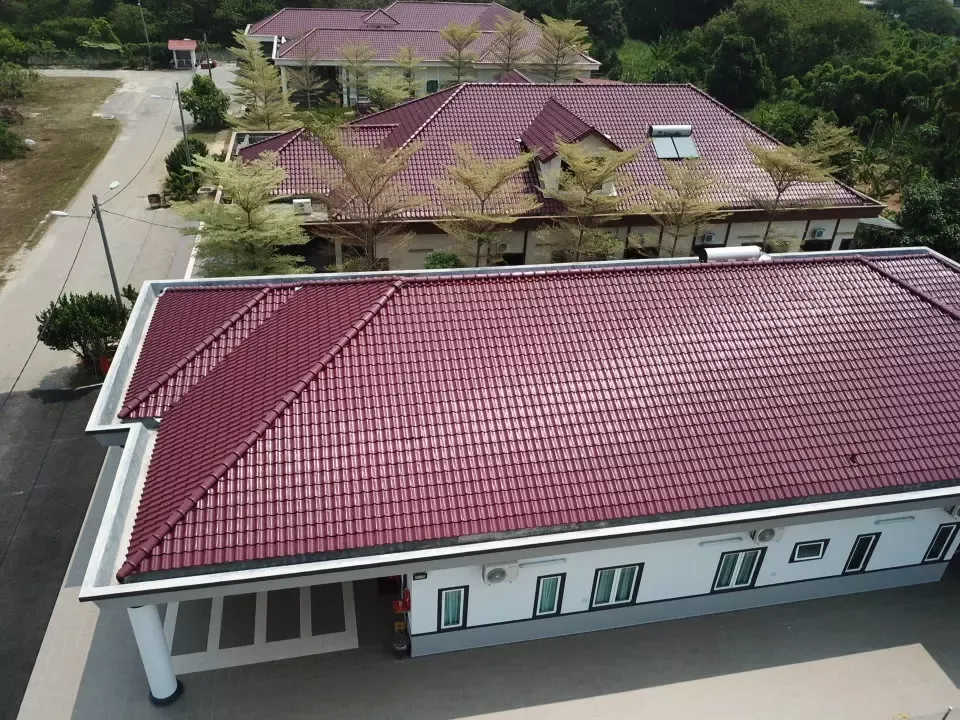
Low-pitched roofs are a growing feature of modern Malaysian residential and commercial architecture. Architects are specifying them for contemporary aesthetic reasons, for thermal efficiency on larger footprints, and because they work well with flat-roof-adjacent design languages. The challenge is that material selection for low-pitched roofs is constrained by pitch in ways that higher-pitch designs are not.
This guide covers how to measure and calculate roof pitch, which materials are specified at which pitch thresholds, and what the installation requirements are for low-pitched roof systems in Malaysia.
What Is a Low-Pitched Roof?
A low-pitched roof in the Malaysian construction context is generally defined as any pitched roof with an angle below 20 degrees. The boundary between a low-pitched roof and a flat roof is typically around 2 to 5 degrees, depending on the material and drainage system used.
Low-pitched roofs are becoming more common in Malaysian residential design as architects move away from steep traditional profiles toward more horizontal design aesthetics. Major developers are actively exploring lower-pitch structures, which creates both design opportunity and material specification challenges.
How to Measure Roof Pitch in Malaysia
Roof pitch is expressed either as an angle in degrees or as a ratio of rise to run. In the Malaysian construction context, degrees is the more common expression.
To measure pitch on an existing roof, a digital level or inclinometer placed on the roof surface or on a long straight batten laid along the roof slope will give an accurate reading. For new designs, pitch is derived from the architectural drawings: divide the rise (vertical height from eave to ridge) by the run (horizontal distance from eave to directly below the ridge), then convert to degrees using the arctangent.
For specification purposes, always confirm the measured or calculated pitch against the minimum pitch requirements of the intended roofing material before finalizing the design.
Which Roofing Materials Work at Low Pitch in Malaysia?
Material minimum pitch requirements from the MONIER Roofing Materials Performance specifications:
- Standard metal (Bluescope PrimaMaju): minimum 2 degrees
- Premium metal (Bluescope Colorbond): minimum 1 degree, varies by profile
- MONIER concrete tiles: minimum 15 degrees
- Fibre cement (SCG Atap Gajah): minimum 17 degrees
- MONIER clay tiles: minimum 25 degrees, varies by design
For pitches below 15 degrees, concrete and clay tiles are not appropriate. Flat roofing systems are the correct specification. For pitches between 15 and 25 degrees, MONIER concrete tiles are specified; clay tiles are not. This is a structural constraint, not a design preference.
Flat Roofing Solutions for Sub-15-Degree Pitches
Where roof pitch falls below 15 degrees, BMI Malaysia offers flat roofing solutions under both the MONIER and GAF brands. These include:
- BMI SEALOFLEX liquid applied systems: seamless coverage for complex roof geometries with penetrations and level changes
- GAF TPO flat roofing: energy-saving, UV-resistant membrane systems suited to commercial and mixed-use buildings with low-slope or flat roof designs
For pitches at 15 degrees and above, MONIER concrete tiles enter the specification range and provide the thermal, acoustic, and longevity performance advantages of the tile system.
Installation Considerations for Low-Pitched Tile Roofs
At the lower end of the tile pitch range, between 15 and 20 degrees, installation precision becomes more critical than on steeper pitches. Water drains more slowly at lower angles, so the interlocking tile geometry must be correctly aligned to prevent water ponding at tile joints. Batten spacing, underlay selection, and fixing schedule all need to be confirmed against the specific tile profile's installation specification.
A RoofPro-certified MONIER installer is trained on the pitch-specific installation requirements of the MONIER system. At lower pitches, this training is particularly relevant because the margin for error is smaller and the consequences of misalignment are more immediate.
Discuss Your Low-Pitch Project with Our Specialist Team
Low-pitched roof design requires early engagement with material specifications. The right roofing system needs to be confirmed against the design pitch before documentation is finalised, not discovered at tender stage.
MONIER's specialist team can confirm pitch suitability, recommend the appropriate system, and support specification documentation for your project. Contact us via BMI Group Website to discuss your low-pitch roofing project.
Frequently Asked Questions
What is the minimum pitch for MONIER concrete tiles in Malaysia?
MONIER concrete tiles require a minimum roof pitch of 15 degrees. Below this threshold, the tile system is not specified for use and a flat roofing solution is required. For pitches of 15 degrees and above, MONIER concrete tiles are the appropriate specification.
Can you use concrete tiles on a low-pitched roof in Malaysia?
Yes, if the pitch is 15 degrees or above. Below 15 degrees, concrete tiles are not specified and flat roofing systems. A BumbungCare assessment or a consultation with the MONIER specialist team will confirm the appropriate system for your specific pitch.
What roofing system is best for a low-pitched roof below 15 degrees?
For pitches below 15 degrees, flat roofing systems are specified. BMI Malaysia offers a range of roofing solutions, including BMI SEALOFLEX liquid-applied systems and GAF TPO for flat roofing. The right system depends on the building type, drainage design, and project requirements.
How do you measure roof pitch in Malaysia for material specification?
Roof pitch is measured as the angle of the roof surface from horizontal, expressed in degrees. A digital level or inclinometer placed on the roof surface or on a straight batten along the slope gives an accurate reading. For new designs, pitch is calculated from the architectural drawings as the arctangent of rise divided by run.
Are low-pitched roofs becoming more common in Malaysian construction?
Yes. Low-pitched roofs are a growing trend in Malaysian residential and commercial architecture, driven by contemporary design aesthetics and architect preferences for more horizontal building profiles. This creates specific material specification challenges because the pitch range below 15 degrees excludes concrete and clay tiles and requires flat roofing system solutions.