Our countries


Europe
 Austria | Österreich
 Belgium | BelgiqueBelgium | België
 Bulgaria | България
 Croatia | Hrvatska
 Czechia | Česko
 Denmark | Danmark
 Estonia | Eesti
 Finland | Suomi
 France
 Germany | Deutschland
 Hungary | Magyarország
 Ireland | Éire
 Italy | Italia
 Latvia | Latvija
 Lithuania | Lietuva
 Netherlands | Nederland
 Norway | Norge
 Poland | Polska
 Portugal
 Romania | România
 Slovakia | Slovensko
 Slovenia | Slovenija
 Spain | España
 Sweden | Sverige
 Switzerland | SchweizSwitzerland | Suisse
 Turkey | Türkiye
 United Kingdom
Search
Tile Roof vs Metal Roof: How Noise Levels Actually Compare in Malaysia
Share:
Tile Roof vs Metal Roof: How Noise Levels Compare in Malaysia
If you have ever tried to have a conversation indoors during a Malaysian afternoon downpour with a metal roof above you, you know the problem. It is not just loud. It is disruptive. Calls drop. Children wake up. Focus disappears.
Sound performance is one of the most consistently underweighted factors in Malaysian roofing decisions, and one of the most consistently regretted after installation. This article explains why the gap between tile and metal roofing on noise is structural and why it tends to widen as the roof ages.
How Do Roof Materials Affect Indoor Noise Levels?
Sound from rain impact works differently depending on the material it hits. A metal sheet transmits raindrop impact directly through the panel as vibration and sound. The thinner and more resonant the material, the louder and longer the noise event.
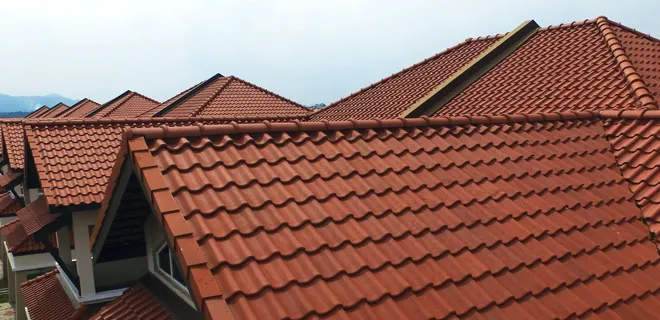
A concrete or clay tile absorbs the raindrop impact at the tile surface. The mass and density of the material damps the vibration before it can transmit into the roof structure below. Less energy passes through, less sound reaches the ceiling, and less noise enters the living space.
Tile's mass stops rain noise at the surface, metal transmits it into the structure. While sound insulation material is generally used to form part of the metal roof system, tiles require only heat insulation to further enhance their already more superior heat-regulating functionality.
This is not a separate insulation layer doing the work. It is the tile material itself and unlike added insulation, it does not degrade over time.
The Noise Reality: What Each System Delivers
Tile Roofing - Acoustic Performance Built In
MONIER® concrete and clay tiles manage rain noise through the inherent physical properties of the material, mass and density. The tile absorbs the raindrop's kinetic energy at the surface. The sound event stops there. No additional acoustic treatment is required, and this performance does not change across the 50-plus year lifespan of the system.
Standard Metal Roofing - Noise Transmitted, Not Absorbed
Standard metal roofing, which is the most common residential option in Malaysia, has no built-in sound absorption. During tropical downpours, uninsulated metal roofs transmit rain noise directly into the structure with nothing to interrupt the vibration path. The result is significant indoor noise during every heavy rainfall event.
Premium metal systems can reduce noise, but only by adding fibre glass wool or similar insulation layers on top of the base roofing cost. This matters for two reasons: it adds significant upfront cost, and those insulation materials are vulnerable to performance loss in Malaysia's tropical humidity around 80%, reaching above 85% during monsoon periods, absorbing moisture and losing their acoustic and thermal effectiveness long before the metal sheet itself fails.
Tile vs Metal: Noise and Comfort Side by Side
How the two systems compare across the noise and comfort factors that matter most in Malaysia's tropical climate:
Factor | Tile Roofing (MONIER®) | Standard Metal Roofing |
|---|---|---|
Rain noise mechanism | Raindrop impact absorbed at tile surface, mass stops vibration before it enters the structure | Raindrop impact transmitted directly through the metal sheet as vibration and sound into the roof structure |
Acoustic treatment needed? | None, noise management is built into the tile material itself | Yes, fibre glass wool or similar insulation layers required for meaningful noise control |
Performance over time | Unchanged, tile mass and density do not degrade | Deteriorates as fibre glass wool and similar insulation materials absorb moisture in tropical humidity |
Thermal cycling effect | Minimal expansion, interlocking geometry remains stable and quiet | Expands up to 3 mm per 6 m panel in tropical heat, loosening fasteners and amplifying noise over time |
Insulation requirement | Heat insulation only, to further enhance tiles' already superior thermal regulation | Sound insulation mandatory as part of the system, plus separate thermal insulation |
Coastal / humid environments | Immune to corrosion, acoustic performance unaffected by humidity | Fibre glass wool and alike degrade faster, coastal salt-air accelerates coating failure and insulation moisture uptake |
Why Metal Noise Gets Worse Over Time
Standard metal roofing that is correctly installed and well-maintained still transmits significant noise during heavy rain. As the roof ages, however, the problem compounds. Fixing points loosen, sheet edges lift slightly through repeated thermal cycling, and the metal loses its flat profile. Each of these changes increases the resonance of the sheet and amplifies rain noise further.
Metal panels expand up to 3 mm per 6-metre panel in tropical heat. This causes creaking sounds, loosens fasteners over time, and causes sealant failure, all of which worsen the noise problem as the years pass.
Fibre glass wool and similar insulation materials added to control metal roofing noise are further compromised by Malaysia's humidity. As they absorb moisture over time, both their acoustic and thermal performance decline, often well before the manufacturer's claimed lifespan is reached.
Concrete tiles do not follow this degradation pattern. The tile mass and interlocking geometry remain consistent throughout the system's design life. The acoustic performance does not worsen with age because it was never dependent on an add-on material to begin with.
Frequently Asked Questions
Are tile roofs quieter than metal roofs in Malaysia?
Yes, and the reason is physical. Tile roofing absorbs raindrop impact at the tile surface through its mass and density, preventing vibration from entering the roof structure. Standard metal roofing has no built-in sound absorption and transmits rain impact directly through the sheet as vibration and noise. Premium metal systems require fibre glass wool or similar insulation added on top of the base cost to achieve comparable noise performance.
Can you add insulation to a metal roof to reduce rain noise?
Yes, but it introduces a long-term performance problem. Fibre glass wool and similar insulation materials used in metal roofing systems absorb moisture in Malaysia's humidity around 80%, rising above 85% during monsoon periods. As moisture uptake increases over time, both the acoustic and thermal performance of these materials declines, often well before the roof's expected lifespan. MONIER® concrete and clay tiles achieve their acoustic performance without any add-ons, and that performance does not decline over time.
Does tile roof sound insulation degrade over time?
No. MONIER® concrete and clay tiles maintain their acoustic and thermal performance throughout their 50-plus year design life. The noise management is inherent to the material's mass and density, not an applied coating or an added layer that can wear away or absorb moisture. The performance on day one is the performance on year fifty.
What is the quietest roofing material for Malaysian homes?
MONIER® concrete and clay tiles consistently outperform standard metal roofing on acoustic comfort without requiring any additional insulation. The tile material itself, through its mass and density, stops rain noise at the surface rather than transmitting it into the structure. Standard metal roofing without insulation is the loudest common roofing material during heavy rain in Malaysian conditions.
Is tile roofing more expensive than metal overall?
When measured by cost per year of life, tile is cheaper. MONIER® Elabana concrete tile works out to RM 1.57 per year of life versus RM 2.17 - 4.00 per year for metal systems. Tile also eliminates the need for added acoustic insulation, which adds cost to any metal roofing system, a cost that is often excluded from initial metal quotes.
Ready to make the right roofing decision?
If you are living with a loud metal roof and planning a re-roof, or specifying a new home, noise performance is a legitimate specification criterion. MONIER® BumbungCare programme connects you with a trained advisor who will assess your roof and confirm the right system for your home.