Our countries


Europe
 Austria | Österreich
 Belgium | BelgiqueBelgium | België
 Bulgaria | България
 Croatia | Hrvatska
 Czechia | Česko
 Denmark | Danmark
 Estonia | Eesti
 Finland | Suomi
 France
 Germany | Deutschland
 Hungary | Magyarország
 Ireland | Éire
 Italy | Italia
 Latvia | Latvija
 Lithuania | Lietuva
 Netherlands | Nederland
 Norway | Norge
 Poland | Polska
 Portugal
 Romania | România
 Slovakia | Slovensko
 Slovenia | Slovenija
 Spain | España
 Sweden | Sverige
 Switzerland | SchweizSwitzerland | Suisse
 Turkey | Türkiye
 United Kingdom
Search
Roof Replacement vs Reroofing Malaysia: What's Best for Your Home?
Share:
Roof Replacement vs Reroofing Malaysia: What's Best for Your Home? | BMI
When your roof reaches the end of its service life or when damage has become extensive enough to warrant major intervention, you will face a fundamental decision: re-roof over the existing structure, or undertake a complete roof replacement. In Malaysia's construction context, both approaches are viable, but each is better suited to specific circumstances.
This guide explains the differences between reroofing and full roof replacement in Malaysia, the criteria for choosing between them, and the questions you should ask a qualified roofing professional before committing to either option.
What Is Reroofing?
Reroofing sometimes called roof overlay or roof restoration, involves installing a new roofing layer over the existing one without removing the current system. This approach is most commonly used when the existing roof structure and substrate are still in sound condition, and the primary goal is to upgrade the weatherproofing layer or improve the roof's thermal and acoustic performance.
On metal deck roofs, for example, reroofing with a modern TPO (Thermoplastic Polyolefin) membrane system over the existing metal deck is a well-established technique that avoids costly tear-off, reduces waste going to landfill, and minimizes disruption to building operations during installation.
What Is Full Roof Replacement?
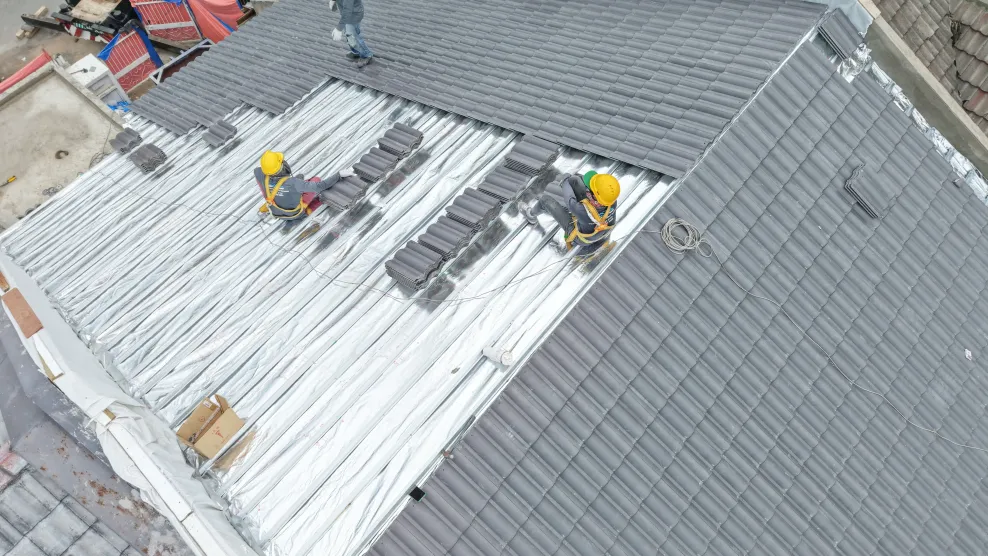
Full roof replacement involves removing the existing roofing system down to the structural deck or rafters, assessing the underlying structure, carrying out any necessary repairs to the structure itself, and installing an entirely new roofing system from scratch. This is a more disruptive and costly process, but it is the only appropriate approach when the existing roof structure has been compromised by water damage, corrosion, or structural deterioration.
Key Criteria for Choosing Between the Two Options
Condition of the Existing Roof Structure
This is the most critical deciding factor. If a structural assessment reveals that roof purlins, rafters, or decking have been compromised by water ingress, corrosion (in the case of metal structures), or termite damage, full replacement is necessary. Reroofing over a compromised structure simply delays the inevitable and may void any warranty on the new installation.
Number of Existing Layers
Building codes and engineering guidelines generally recommend against installing more than two roofing layers on a structure, as the additional weight increases the load on the roof framing. If your roof already has a previous overlay, full replacement is typically the recommended route.
Budget and Timeline
Reroofing is typically less expensive and faster to complete than full replacement, as it eliminates the cost and time associated with tear-off and structural remediation. For commercial buildings that need to remain operational during works, this can be a particularly important consideration.
Energy Performance Goals
Roof replacement provides the opportunity to upgrade the complete thermal assembly, including insulation layers, vapour barriers, and waterproofing membranes to current energy efficiency standards. This can deliver significant reductions in cooling energy consumption that may not be achievable to the same degree through an overlay.
Reroofing in Malaysia: What Works Well
Malaysia has seen growing adoption of membrane overlay systems on industrial and commercial buildings, particularly on ageing metal deck roof systems that have developed corrosion, loose fasteners, or open laps. Applying a liquid-applied or single-ply membrane system over an existing metal deck that is otherwise structurally sound provides a cost-effective, long-term waterproofing solution without the disruption of full replacement.
For residential pitched roofs, partial or full tile replacement on a sound roof structure, including the installation of a new underlay and appropriate accessories can restore weathertightness and extend the roof's service life by several decades.
When Full Replacement Is the Right Choice
• Structural inspection reveals corrosion, rot, or termite damage to roof framing or decking
• Existing roof has already been overlaid once previously
• Major changes to building use create different load or thermal performance requirements
• Insurance claim or building code compliance requires full system certification
• Owner seeks maximum performance and a full long-term warranty covering the complete system
The Role of Professional Assessment
No homeowner or building manager should make a decision between reroofing and replacement without a professional inspection and structural assessment. A qualified roofing consultant or certified installer can evaluate the condition of the existing structure, identify hidden damage that may not be visible from above, and provide a clear recommendation based on the actual condition of your roof rather than a blanket approach.
Conclusion
Reroofing offers a cost-effective path to restoring roof performance when the underlying structure is sound. Full replacement delivers the highest long-term performance and the most comprehensive warranty coverage, and is the appropriate choice when structural integrity has been compromised. In both cases, engaging a certified, experienced roofing professional is the foundation of a successful project.
BMI Group Malaysia provides assessment, specification, and certified installation services for both reroofing and complete roof replacement projects across residential and commercial applications.