Our countries


Europe
 Austria | Österreich
 Belgium | BelgiqueBelgium | België
 Bulgaria | България
 Croatia | Hrvatska
 Czechia | Česko
 Denmark | Danmark
 Estonia | Eesti
 Finland | Suomi
 France
 Germany | Deutschland
 Hungary | Magyarország
 Ireland | Éire
 Italy | Italia
 Latvia | Latvija
 Lithuania | Lietuva
 Netherlands | Nederland
 Norway | Norge
 Poland | Polska
 Portugal
 Romania | România
 Slovakia | Slovensko
 Slovenia | Slovenija
 Spain | España
 Sweden | Sverige
 Switzerland | SchweizSwitzerland | Suisse
 Turkey | Türkiye
 United Kingdom
Search
Modern Roof Design Trends in Malaysia 2026 for Your Home
Share:
Modern Roof Design Trends in Malaysia 2026 for Your Home
The Malaysian residential construction landscape is evolving. Homeowners are making more considered decisions about their roofs than ever before, driven by rising energy costs, growing awareness of long-term maintenance, a renewed appreciation for authentic materials, and the influence of design movements that are reshaping what a roof is expected to do.
In 2026, the residential roofscape across Malaysia reflects these converging influences. Roofs are being specified not just to keep rain out, but to manage heat, express architectural character, support solar energy, and perform reliably for decades without constant attention.
Trend 1: Cool Roof Tile Colours as a Practical Choice
In Malaysia’s tropical climate, managing indoor heat gain has become an increasingly important consideration for homeowners. As energy efficiency continues to influence residential design decisions in 2026, roof colour selection is increasingly being discussed alongside broader roofing system performance.
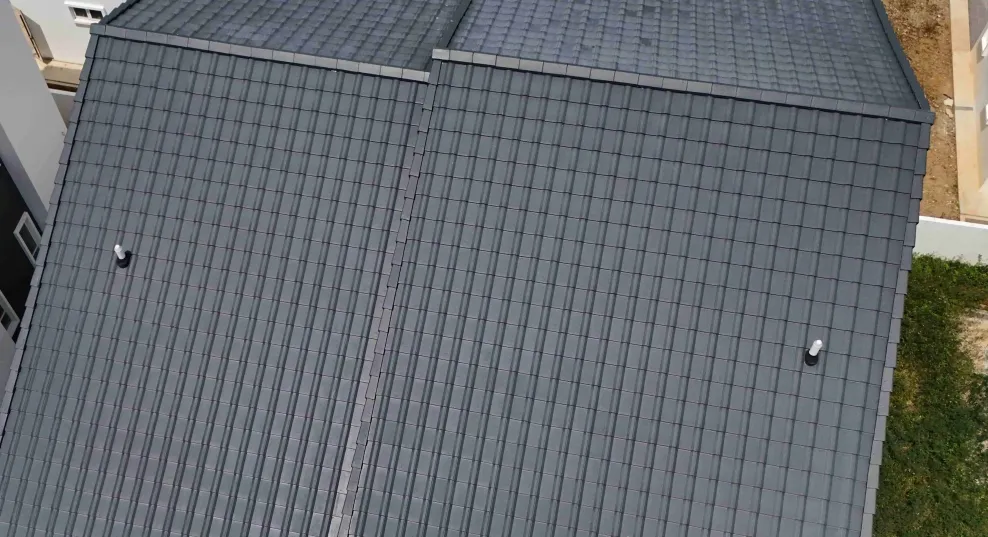
Lighter roof tile tones, including soft cream, warm grey, and natural terracotta finishes, are often appreciated for their ability to reflect a higher proportion of solar radiation compared to darker shades. However, achieving a “cool roof” effect is rarely dependent on colour alone. Overall thermal performance is influenced by the complete roof system, including the roof tile profile, underlay specification, insulation approach, ventilation design, and installation quality.
This holistic approach allows homeowners and designers greater flexibility in balancing aesthetics and performance. Darker roof colours continue to remain highly relevant in contemporary architecture and can still contribute to a thermally efficient roof design when supported by the appropriate roofing components and ventilation strategy.
As sustainability considerations become more prominent, homeowners and project specifiers are also placing greater emphasis on measurable roof performance indicators, including Solar Reflectance Index (SRI) values, particularly for projects aligned with Green Building Index (GBI) or other green building frameworks.
Trend 2: Heritage and Authentic Materials in Contemporary Design
There is a growing and well-documented appetite among Malaysian homeowners for materials that feel genuinely authentic rather than manufactured. This is particularly evident in roofing, where clay tiles are experiencing a significant resurgence in residential specification across a wide range of architectural styles, from traditional Malay and Peranakan-inspired designs to contemporary homes that use heritage materials deliberately as a counterpoint to clean, modern geometry.
MONIER®'s range of clay tile profiles, including the S-Pantile, Toscana Warisan and the newly introduced Marselha MG Plus, reflects this trend. Clay tiles bring a depth of colour and surface texture that cannot be replicated by synthetic materials. Their colour comes from the clay body itself rather than an applied coating, meaning it does not fade, chalk, or peel over time. Instead it deepens gradually, giving the roof a richer and more characterful appearance as the years pass.
For homeowners building or renovating in heritage-sensitive areas, clay tiles are frequently the only material accepted by local planning authorities, making them not just a design preference but a specification requirement.
Trend 3: Acoustic Comfort as a Specification Criterion
The experience of living through a Malaysian monsoon downpour under a metal roof has made acoustic performance a much more prominent consideration in residential roofing decisions. In 2026, homeowners and developers are increasingly asking about rain noise as part of the roofing specification conversation rather than discovering the problem after the roof is installed.
MONIER® concrete and clay tiles manage rain noise through the inherent mass and density of the tile material. The tile absorbs raindrop impact at its surface, dampening the vibration before it can transmit into the roof structure and into the living space below. This is not a function of a separate acoustic layer. It is built into the tile itself, and it does not degrade over time.
For families with young children, those working from home, or anyone who values a quiet living environment during the months of heavy rainfall, this is a practical specification advantage that becomes noticeable every time it rains.
Trend 4: Solar-Ready Roof Design
Rooftop solar panel installation on Malaysian homes has grown significantly as panel costs have fallen and electricity tariffs have increased. In 2026, the question for many homeowners is no longer whether to install solar, but whether their existing or planned roof can accommodate it properly.
MONIER® pitched tile roofs are well suited to solar integration. The roof slope provides natural drainage and the structural framing beneath a tile roof is designed to carry meaningful loads. Solar panel mounting systems for pitched tile roofs are well established, with fixing methods that work with the tile system without compromising the waterproofing layer.
For new residential builds, the conversation about solar is increasingly happening at the roof design stage rather than after the fact, allowing the roof structure, tile selection, and mounting provisions to be coordinated from the outset. Specifying a MONIER® tile system through a BMI RoofPro certified contractor ensures the installation is carried out in a way that maintains the system warranty even when solar mountings are added.
Trend 5: Low-Maintenance Systems with Long-Term Warranty Coverage
Malaysian homeowners in 2026 are increasingly making roofing decisions based on total lifecycle cost rather than lowest upfront price. The experience of recurring maintenance bills, repeated minor repairs, and the disruption of re-roofing within fifteen to twenty years of original installation has shifted the conversation toward longer-lasting systems with documented performance assurance.
MONIER® backs its roof tile systems with a manufacturer guarantee of up to 10 years, covering the complete installed roof system. This system-level guarantee recognises that long-term roof performance depends on how the tiles, underlays, battens, and other roofing components work together as an integrated system.
More significantly, the actual lifespan of a tile roof routinely exceeds the warranty period by decades. A concrete tile installed today is realistically the last roof a homeowner will ever need to install on that property.
Trend 6: Simplicity of Maintenance as a Selling Point
Alongside the preference for longer-lasting systems, Malaysian homeowners are increasingly drawn to roofing materials that require minimal intervention across their service life. The expectation of scheduled professional maintenance programmes is less established in the residential roofing segment, and for most homeowners, the most meaningful assurance is a roof that simply does not demand attention year after year.
Concrete and clay tiles meet this expectation through their durable material properties and long service life. The tiles are designed with a protective coating layer that helps maintain appearance and performance over time, without the need for frequent recoating or corrosion treatments.
The primary maintenance tasks for a tiled roof are periodic gutter clearing, routine inspections, and prompt attention to any individual tiles displaced by extreme weather events. Individual tile replacement, when required, is straightforward and can be carried out only on the affected section rather than requiring replacement of the entire roof.
This is a meaningful contrast to metal roofing systems, which typically require routine inspection for coating degradation, fastener corrosion, and sealant failure, with major recoating or remedial work commonly arising after 20 to 25 years of service. For a homeowner who wants a roof that performs consistently without ongoing management, the tile system's inherent material stability is the most honest and durable answer available.
What These Trends Mean for Your Roofing Decision
The six trends above point toward a residential roofing market in Malaysia where performance, authenticity, and long-term value are increasingly prioritised over lowest upfront cost. The homeowners making the best roofing decisions in 2026 are those who are asking the right questions early in the design process:
- What is the lifecycle cost of this system, not just the installation price?
- Does the tile colour and profile contribute to the thermal performance of my home?
- Is the system backed by a manufacturer warranty that covers both materials and workmanship?
- Is the contractor certified to install this specific system?
- Is the roof designed to accommodate solar panels now or in the future?
MONIER®'s range of concrete and clay tile systems, backed by BMI Group Malaysia's technical expertise and RoofPro certified installer network, is designed to answer all of these questions with confidence.
Conclusion
Residential roofing in Malaysia in 2026 is a more considered and better-informed market than it has been at any previous point. The trends shaping it, cool roof colours, authentic clay materials, acoustic comfort, solar readiness, long-term warranty coverage, and structured maintenance, are not passing fashions. They are responses to genuine climate, economic, and lifestyle pressures that will continue to shape how Malaysian homeowners think about their roofs for years to come.
For specification advice, certified installer referrals, and information on MONIER®'s full range of residential tile systems, contact BMI Group Malaysia or call 1800 88 0865.