Our countries


Europe
 Austria | Österreich
 Belgium | BelgiqueBelgium | België
 Bulgaria | България
 Croatia | Hrvatska
 Czechia | Česko
 Denmark | Danmark
 Estonia | Eesti
 Finland | Suomi
 France
 Germany | Deutschland
 Hungary | Magyarország
 Ireland | Éire
 Italy | Italia
 Latvia | Latvija
 Lithuania | Lietuva
 Netherlands | Nederland
 Norway | Norge
 Poland | Polska
 Portugal
 Romania | România
 Slovakia | Slovensko
 Slovenia | Slovenija
 Spain | España
 Sweden | Sverige
 Switzerland | SchweizSwitzerland | Suisse
 Turkey | Türkiye
 United Kingdom
Search
5 Key Benefits of Choosing a Concrete Roof for Your Home
Share:
5 Key Benefits of Choosing Concrete Roofs for Your Home
Metal roofing may look more affordable at the quotation stage, but the longer-term picture can change once heat control, corrosion exposure, maintenance, and service life are taken into account.
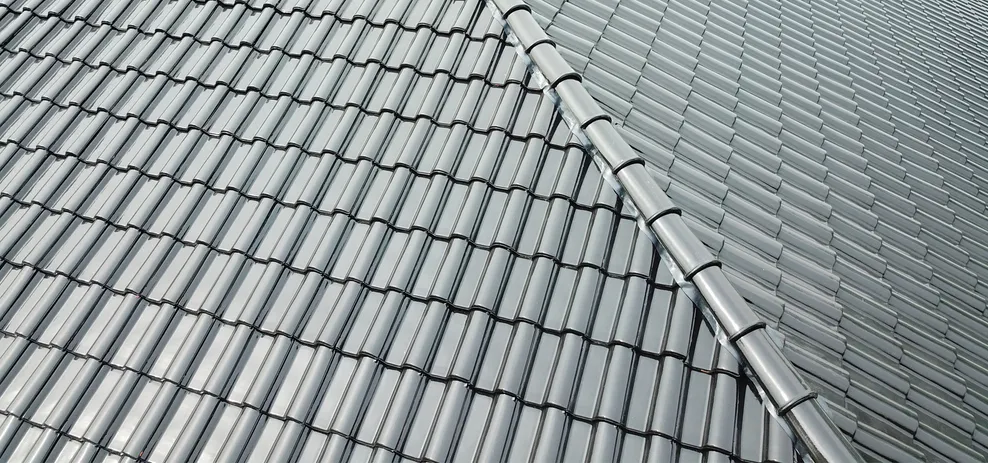
Concrete roof tiles have been widely used in Malaysia for decades because their performance characteristics suit the local tropical climate. Their rust-free material properties, durability, thermal mass, and long-term weather resistance make them a practical choice for many residential roofing applications. Here are the five benefits that matter most.
Benefit 1: Your Home Stays Cooler With Better Thermal Performance
A MONIER® roofing system is designed to support better thermal performance through the combination of roof tiles, ventilation, and other compatible roofing components. The complete system helps manage heat transfer into the roof cavity and indoor space, reducing the impact of temperature fluctuations during Malaysia’s peak heat hours, when rooftop surface temperatures can exceed 60 degrees Celsius.
Lightweight roofing materials generally transfer heat more quickly into the roof cavity and ceiling space, which is why additional insulation systems or reflective technologies are often incorporated to improve thermal performance.
MONIER® concrete tiles contribute to indoor thermal comfort through their material mass and roof system design. As part of a properly specified roofing build-up that includes ventilation, underlay, ceiling insulation, and quality installation, they help support more stable indoor temperatures in tropical climates.
Benefit 2: Rain Noise Can Be Better Controlled
Heavy rain on a metal roof without insulation panels is disruptive. Anyone who has tried to work from home or put a child to sleep during a Kuala Lumpur afternoon storm knows this well.
MONIER® concrete tiles deliver 51 dB of built-in sound insulation. The tile material absorbs raindrop impact at the surface. No sandwich panels. No additional acoustic layer. The insulation is part of the tile itself.
For homeowners with young children, home offices, or simply a preference for a quieter living environment, this is a functional advantage that does not appear on a materials-only quote comparison.
Benefit 3: No Rust, No Coatings, No Maintenance Schedule
Concrete tiles are non-metal, so they do not rust or corrode. This makes them well-suited for Malaysia’s high-humidity environment, where long-term durability is essential.
Metal roofing, on the other hand, relies on protective coatings to prevent rust. Over time, these coatings can wear down and require maintenance or renewal. Without proper upkeep, corrosion may develop, especially in humid or coastal areas.
Concrete tile roofs are designed for long-term performance, often lasting 50 years or more. They do not require coating maintenance and have minimal risk of corrosion, resulting in lower long-term maintenance needs compared to metal roofing.
Benefit 4: It Handles Malaysia's Wind Loads
MONIER® concrete tiles resist wind uplift up to 290 km/h. Standard metal sheet roofing lifts below 160 km/h wind. Premium metal manages up to 240 km/h when properly installed. Concrete surpasses both.
This matters in Malaysia's storm season, particularly in areas exposed to strong convective weather. A roof that lifts in high wind is not just a repair problem. It is a safety issue. Concrete tiles do not lift.
Benefit 5: Lower Carbon Footprint Across the Life of the Roof
Research indicates that concrete roof tiles generally have a lower embodied carbon footprint compared to metal roofing for the same roof area. This makes them a more environmentally considerate option, especially for long-term residential use.
For homeowners with Green Building Index considerations, sustainability targets, or simply a preference for lower-impact materials, concrete tiles are the better choice. And because they last 50-plus years without replacement, the per-year carbon cost is lower still.
See the Difference for Yourself
MONIER® Experience Centre in Bukit Kemuning is open for homeowners who want to see concrete tile options in person before making a decision. You can view the product range, ask technical questions, and understand exactly what your roof structure can support.
For a personalised recommendation, BumbungCare connects you with a trained advisor who will assess your roof and match the right system to your home. Call 1800 88 0865 or visit BMI Group Website to book a free consultation.
Frequently Asked Questions
Why choose concrete roof tiles over metal in Malaysia?
Concrete roof tiles offer strong advantages in rust resistance, material mass, durability, and long-term maintenance considerations. They are designed for long service life, provide natural thermal and acoustic performance, and do not rely on corrosion-protection coating systems. In comparison, some lightweight roofing systems may require additional insulation layers, protective coatings, or more frequent maintenance depending on the material specification and environmental conditions.
Are concrete roofs good for hot weather in Malaysia?
Yes. Concrete tiles have high thermal mass that naturally stabilizes indoor temperature during Malaysia's peak heat hours without requiring additional insulation. Metal roofing absorbs and transfers heat rapidly, requiring extra components to achieve a similar effect.
How long does a MONIER® concrete roof last?
MONIER® concrete roof tiles are designed for 50 or more years of service under normal Malaysian conditions. They are rust-free and require no recoating, making the maintenance cost over their lifespan significantly lower than metal alternatives.
Do concrete roof tiles require maintenance?
MONIER® concrete tiles require minimal maintenance. There is no rust treatment, no coating schedule, and no insulation add-ons needed. Periodic cleaning and inspection are recommended, but there are no material-specific maintenance obligations the way there are with metal roofing.
What is the carbon footprint of concrete roof tiles?
According to Curtin University research, MONIER® concrete roof tiles carry a carbon footprint of 5.6 tCO2 per 100 sqm, compared to 9.85 tCO2 per 100 sqm for metal roofing. This 43% difference makes concrete tiles a lower-impact choice for homeowners with sustainability considerations.