Our countries


Europe
 Austria | Österreich
 Belgium | BelgiqueBelgium | België
 Bulgaria | България
 Croatia | Hrvatska
 Czechia | Česko
 Denmark | Danmark
 Estonia | Eesti
 Finland | Suomi
 France
 Germany | Deutschland
 Hungary | Magyarország
 Ireland | Éire
 Italy | Italia
 Latvia | Latvija
 Lithuania | Lietuva
 Netherlands | Nederland
 Norway | Norge
 Poland | Polska
 Portugal
 Romania | România
 Slovakia | Slovensko
 Slovenia | Slovenija
 Spain | España
 Sweden | Sverige
 Switzerland | SchweizSwitzerland | Suisse
 Turkey | Türkiye
 United Kingdom
Search
MONIER® Roofing System: How to Solve Leaks, Heat and Maintenance Problems for Good
Share:
MONIER Roofing System: Fixing Leaks, Heat & Maintenance
Your ceiling has a water stain that keeps coming back. Your upstairs bedroom hits 34 degrees by noon. And every time it rains hard, you hold your breath.
These are not isolated problems. They all trace back to the same source: a roof that was never built as a system. Most homeowners patch one tile, seal one joint, then wait for the next problem. It always comes.
This article is for Malaysian homeowners and renovation decision-makers who are tired of repeat fixes. We will break down exactly how the MONIER® roofing system addresses leaks, heat, and maintenance at the root level, not the surface.
The Real Reason Your Roof Keeps Failing
In many cases, the issue is not the tile alone. It is the way the whole roof was specified, detailed, and installed.
Every time. does not give roofs an easy life: sustained monsoonal rain, brutal UV, high humidity year-round, and wind gusts that can exceed 150 km/h during storms. A patchwork roof was not designed for any of that.
MONIER® builds roofs differently. Every tile, underlay, batten, and fixing is engineered to work as one unit. BMI Malaysia's Experience Centre is where this system thinking is applied, developed in collaboration with industry experts across the BMI Group.
What Is the Best Roofing System for Malaysia's Climate?
The best roofing system for Malaysia's climate should effectively manage heat, prevent water ingress, withstand high winds, and deliver long-term durability with minimal maintenance. Achieving these benefits depends on a complete roofing system working together, not just the roof covering itself.
MONIER® roofing systems are designed to address these challenges through an integrated combination of roof tiles, underlay, battens, fixing components, ventilation solutions, and professional installation. Here is how the system performs against the conditions Malaysian homeowners commonly face:
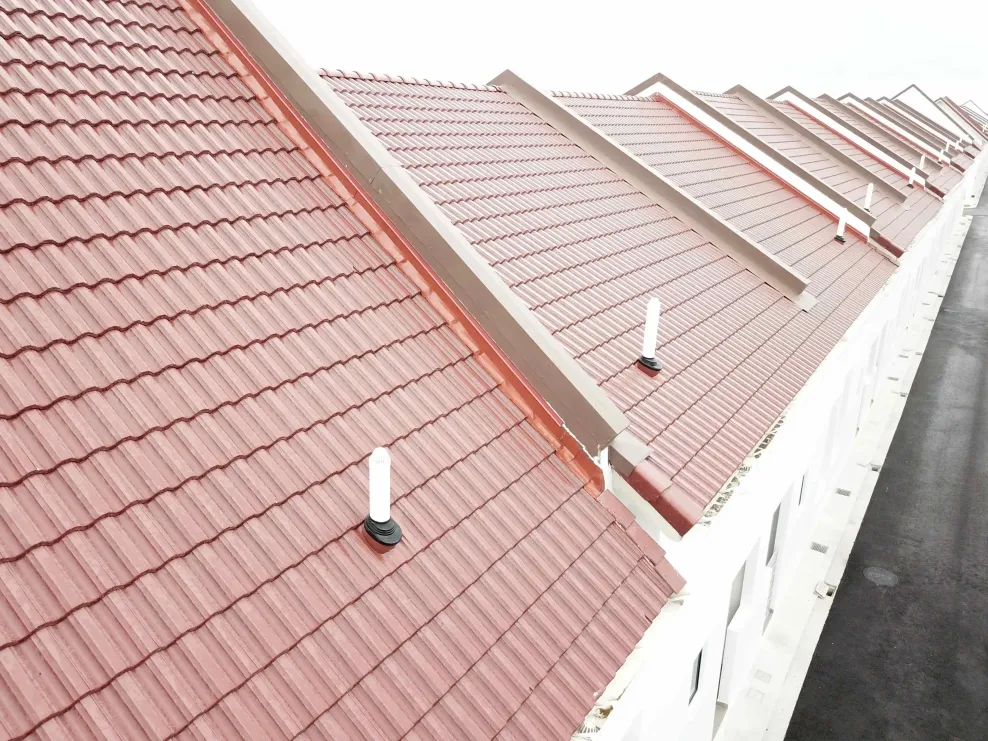
- Heat: The thermal performance of a MONIER® roofing system comes from the combination of concrete roof tiles, roof cavity design, and ventilation components. Concrete tiles provide natural thermal mass that helps reduce heat transfer, while proper roof system design supports a more comfortable indoor environment.
- Leaks: MONIER® roofing systems use interlocking roof tiles together with underlay and approved installation methods to create multiple layers of protection against rain and water ingress. This integrated approach helps provide reliable weather protection over the long term.
- Wind and rust: When installed as part of a complete MONIER® roofing system, concrete roof tiles can resist wind uplift of up to 290 km/h, depending on the roof design and fixing specification. Concrete tiles are also naturally rust-free, eliminating concerns associated with corrosion-prone roofing materials.
- Maintenance: A properly specified and installed MONIER® roofing system is designed for long-term performance with minimal maintenance requirements. The durability of the tiles, combined with compatible roofing components, helps reduce the need for frequent repairs, recoating, or major system upgrades throughout the roof's service life.
How the MONIER®Roofing System Stops Leaks
Most roof leaks in Malaysian homes come from three places: poor installation, failing sealants at sheet overlaps, or components from different suppliers that were never meant to work together. MONIER® system design removes all three variables.
The interlocking tile geometry channels water off the roof without depending on sealant joints. This is not a minor design detail. Malaysia sees rainfall intensity above 80 mm per hour during peak monsoon periods. A sealant-dependent system is a leak waiting to happen at that kind of load.
Certified installers under the MONIER® RoofPro program work from a defined specification: correct batten spacing, approved underlay, verified fixing method. There is no guesswork on site. The installation either meets the spec or it does not.
Why Concrete Tiles Keep Your Home Cooler
Heat coming through the roof is the most common comfort complaint in Malaysian homes, and the least often fixed correctly. Most people blame ventilation or air conditioning. The roof is usually the real problem.
Standard metal roofing heats up fast under direct tropical sun and transfers that heat into the roof cavity and ceiling below. Premium metal uses THERMATECH technology to slow this down. Both require something extra to manage a problem that concrete tiles never had.
Concrete roof tiles are dense materials that can help slow heat transfer through the roof system. When combined with appropriate roof design and ventilation, they can reduce the impact of peak daytime heat and help create a more stable indoor environment. This is particularly beneficial during Malaysia's hottest hours, when roof surfaces are exposed to intense solar radiation.
Research from puts the carbon footprint of concrete roof tiles at 5.6 tCO2 per 100 sqm. Metal roofing comes in at 9.85 tCO2 per 100 sqm. The gap is 43%. Better thermal performance and a lower carbon output from the same product.
Rain Noise Is a Roofing Problem Too
Anyone who has lived under a metal roof during a Malaysian downpour knows the sound. It is not a minor inconvenience. It makes conversation impossible and wakes children up at 2am.
The tile material absorbs raindrop impact at the surface. Metal sheets transmit it straight through.
If you work from home, have young children, or manage a property where noise disrupts operations, this is a functional specification point worth taking seriously.
The Full Cost of a Cheap Roof
Most roof quotes show you materials. They do not show you the ten-year cost of owning that material.
A lower roof quote does not always mean a lower long-term cost. The better question is what the homeowner is actually paying for over the life of the roof. That includes not just the covering material, but also the supporting components, installation quality, maintenance needs, repair frequency, and how well the system continues to perform over time.
A system that is correctly designed and installed from the start can be more cost-effective in the long run than one that appears cheaper on day one but requires repeated corrective work later. The BMI technical material supports this broader point by positioning system solutions as more durable, longer-lasting, and more cost-effective to maintain.
Talk to MONIER® Before You Commit to Anything
If your roof is leaking, running hot, or overdue for replacement, patching it again is not a plan. The second worst move is committing to a material or contractor without getting a proper system assessment first.
MONIER® BumbungCare program connects Malaysian homeowners with trained advisors who will assess your actual roof structure, your budget, and your home's specific needs before recommending anything. They can also connect you with a RoofPro-certified installer in your area so the work is done to a guaranteed standard.
BMI Malaysia has been in this market for over 73 years. MONIER® has a long-standing presence and major market share in Malaysia’s pitched roofing market. Backed by decades of roofing experience in Malaysia, MONIER® supports homeowners, developers, and roofing professionals with proven roof tile systems, technical expertise, and certified installation support.
Call BumbungCare on 1800 88 0865 or visit bmigroup.com/my to book a free consultation. No obligation. Just a clear answer on what your roof actually needs.
Frequently Asked Questions
What makes a roofing system different from just replacing roof tiles?
A roofing system covers every layer: tiles, underlays, battens, fixings, and components, all specified to work together. Replacing individual tiles without addressing the full system leaves the underlying causes of failure untouched. Poor drainage paths, degraded underlays, and incompatible components keep causing problems regardless of how many surface tiles you swap out.
How does MONIER® concrete roofing reduce indoor heat in Malaysia?
MONIER® helps reduce indoor heat through its Cool Roof System, which is designed to minimize heat transfer into the building. The system combines reflective roofing materials, roof ventilation, and compatible roofing components that work together to reduce heat build-up within the roof space.
By addressing heat at the system level rather than relying on a single component, the MONIER® Cool Roof System can help create a more comfortable indoor environment, especially during Malaysia's hot and humid weather conditions. The effectiveness of the system depends on the overall roof design, ventilation strategy, and installation in accordance with project requirements.
What is the MONIER® RoofPro program and why does it matter?
RoofPro is MONIER® installer certification program. This means your roof installation is tied to a documented standard and backed by a formal written guarantee, rather than relying entirely on the individual contractor's judgment.
How long does a MONIER® concrete roof tile system last?
A MONIER® pitched roof system is designed to deliver decades of reliable performance under normal Malaysian conditions. When properly specified, installed, and maintained, the system can provide long-term durability while resisting common issues such as corrosion, weathering, and water ingress.
Unlike some roofing materials that may require regular recoating or corrosion treatment, MONIER® roofing components are designed for low maintenance throughout their service life. This long-term durability can help reduce lifecycle costs and provide lasting value for homeowners and building owners.
Is the MONIER® roofing system suitable for low-pitch roofs?
Yes. MONIER® offers selected roof profiles that are suitable for low-pitch roof applications, with a minimum roof pitch requirement of 15 degrees. The exact minimum pitch may vary depending on the tile profile and roof design. For projects with roof pitches below 15 degrees, BMI Malaysia provides alternative waterproofing solutions such as BMI EverGuard TPO membrane systems and BMI SEALOFLEX liquid-applied systems. Contact BumbungCare with your roof measurements, and our team will recommend the most suitable roofing solution for your project.