Our countries


Europe
 Austria | Österreich
 Belgium | BelgiqueBelgium | België
 Bulgaria | България
 Croatia | Hrvatska
 Czechia | Česko
 Denmark | Danmark
 Estonia | Eesti
 Finland | Suomi
 France
 Germany | Deutschland
 Hungary | Magyarország
 Ireland | Éire
 Italy | Italia
 Latvia | Latvija
 Lithuania | Lietuva
 Netherlands | Nederland
 Norway | Norge
 Poland | Polska
 Portugal
 Romania | România
 Slovakia | Slovensko
 Slovenia | Slovenija
 Spain | España
 Sweden | Sverige
 Switzerland | SchweizSwitzerland | Suisse
 Turkey | Türkiye
 United Kingdom
Search
GAF Flat Roof Solutions for Sustainable Buildings
Share:
GAF Flat Roof Solutions for Sustainable Buildings | BMI Malaysia
Sustainability is no longer a differentiator in commercial construction it is increasingly a baseline expectation. Building owners, developers, tenants, and regulators across Malaysia are raising their standards for environmental performance, energy efficiency, and material transparency. The roofing system as one of the largest single components of a building's envelope, plays a central role in meeting these expectations.
GAF flat roof solutions, available through BMI Group Malaysia, are designed with sustainable building performance as a core consideration. From cool roof technology that reduces cooling energy demand to LEED-compliant product documentation and Environmental Product Declarations (EPDs), GAF systems provide the technical credentials that sustainable building projects require.
Cool Roof Technology: Reducing the Urban Heat Island Effect
The urban heat island effect the phenomenon by which dense urban areas experience significantly higher temperatures than surrounding rural environments is a documented challenge in Kuala Lumpur and other Malaysian cities. Dark-coloured roofing surfaces absorb solar radiation and re-emit it as heat, contributing to elevated ambient temperatures that increase cooling demand across the urban environment.
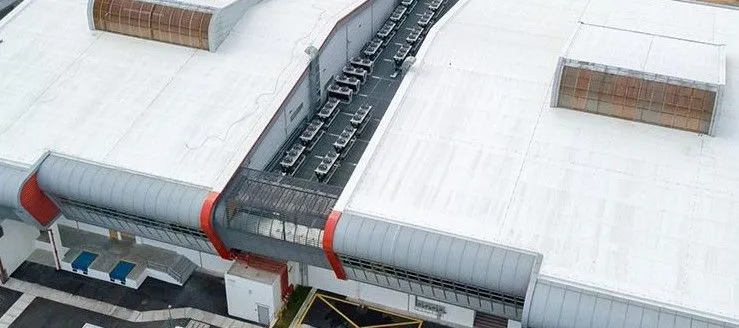
GAF EverGuard TPO membranes are available in white and grey formulations with SRI values of 94 and 88 respectively. GAF's high-solid silicone coating systems achieve an SRI value of 111 in white formulation. These high-reflectance surfaces reflect the majority of incident solar radiation rather than absorbing it, keeping roof surface temperatures substantially lower and reducing the heat island contribution of the building.
For green building certification schemes such as LEED and the Green Building Index (GBI), specifying a high-SRI roofing product contributes to credits under energy performance and heat island reduction categories, directly supporting certification achievement.
Energy Performance: Measurable Impact on Cooling Loads
A roof system that minimizes solar heat gain directly reduces the thermal load on the building's air conditioning system. This translates into lower electricity consumption, reduced carbon emissions, and lower operating costs throughout the building's life.
When a cool roof membrane is combined with an appropriate insulation specification such as PIR insulation boards with very low thermal conductivity values, the complete roof assembly can achieve U-values that significantly exceed Malaysian regulatory minimums, contributing to energy efficiency credits in certification assessments and delivering tangible savings on energy bills.
LEED Compliance and Green Building Credentials
Environmental Product Declarations
Environmental Product Declarations (EPDs) are third-party verified documents that quantify the environmental impact of a product across its lifecycle, from raw material extraction through manufacturing, use, and end of life. GAF EverGuard TPO systems are supported by EPDs prepared to the EN 15804+A2 standard, providing the product transparency documentation required for LEED Materials and Resources (MR) credits.
Recycled Content
GAF TPO and PVC systems incorporate recycled material content and are themselves recyclable at end of life, supporting circular economy principles and contributing to LEED MR credits related to recycled content and material transparency.
Low-VOC Adhesive Options
Indoor Environmental Quality (IEQ) credits in LEED require that roofing adhesives and sealants meet low-VOC content thresholds. GAF's water-based adhesive system achieves VOC content below 20 g/L, well within LEED compliance thresholds contributing to IEQ credits while also reducing installation site emissions that affect worker health.
Waste Reduction Through Restoration Systems
One of the most significant environmental considerations in roofing is the waste generated by full membrane replacement, old material going to landfill, new material being manufactured and transported. GAF's liquid-applied silicone and acrylic coating systems provide an alternative pathway: applying a new waterproofing layer directly over an existing membrane that still has structural integrity, extending its service life without full replacement.
This restoration approach contributes to LEED credits under Material Resources related to building life-cycle management, and represents a genuinely lower-environmental-impact roofing decision when the existing substrate is suitable.
Green Roof Integration
For projects seeking the maximum sustainability impact from their roof area, GAF flat roof systems can be specified as the waterproofing foundation for green roof installations. Vegetated roofs provide additional insulation, manage storm water through water retention and evapotranspiration, reduce urban heat island contribution, and create biodiversity value, particularly important for projects seeking Biophilic Design or LEED Sustainable Sites credits.
The waterproofing layer beneath a green roof must be root-resistant and designed to manage the additional loading and moisture conditions associated with a vegetated installation. GAF's root-resistant membrane formulations are specifically designed for use in inverted and green roof assemblies.
Conclusion
Sustainable building performance and long-term commercial value are not competing objectives, they are complementary. GAF flat roof solutions from BMI Group Malaysia provide the technical performance, certified documentation, and system flexibility to support both goals simultaneously. From cool roof SRI values that contribute to energy credits to EPD documentation for material transparency, GAF systems are aligned with the sustainability agenda that is shaping Malaysian commercial construction.
For green building certification support, sustainable roofing specification, and access to GAF's full documentation suite, contact BMI Group Malaysia's technical team.