Our countries


Europe
 Austria | Österreich
 Belgium | BelgiqueBelgium | België
 Bulgaria | България
 Croatia | Hrvatska
 Czechia | Česko
 Denmark | Danmark
 Estonia | Eesti
 Finland | Suomi
 France
 Germany | Deutschland
 Hungary | Magyarország
 Ireland | Éire
 Italy | Italia
 Latvia | Latvija
 Lithuania | Lietuva
 Netherlands | Nederland
 Norway | Norge
 Poland | Polska
 Portugal
 Romania | România
 Slovakia | Slovensko
 Slovenia | Slovenija
 Spain | España
 Sweden | Sverige
 Switzerland | SchweizSwitzerland | Suisse
 Turkey | Türkiye
 United Kingdom
Search
Concrete Roofs in Malaysia: Benefits, Drawbacks and What Installation Actually Involves
Share:
Concrete Roofs Malaysia: Benefits, Drawbacks & Installation Guide
Most roofing content tells you what a material does well. You need to know what it does poorly too, so the decision is based on the full picture.
This guide covers MONIER concrete roof tiles from both sides. Concrete roof tiles offer several well-established performance advantages, while also having practical design and installation considerations that should be evaluated before specification.
By the end you will know whether a concrete roof is right for your home and what it takes to install one correctly.
What Are Concrete Roof Tiles Made Of?
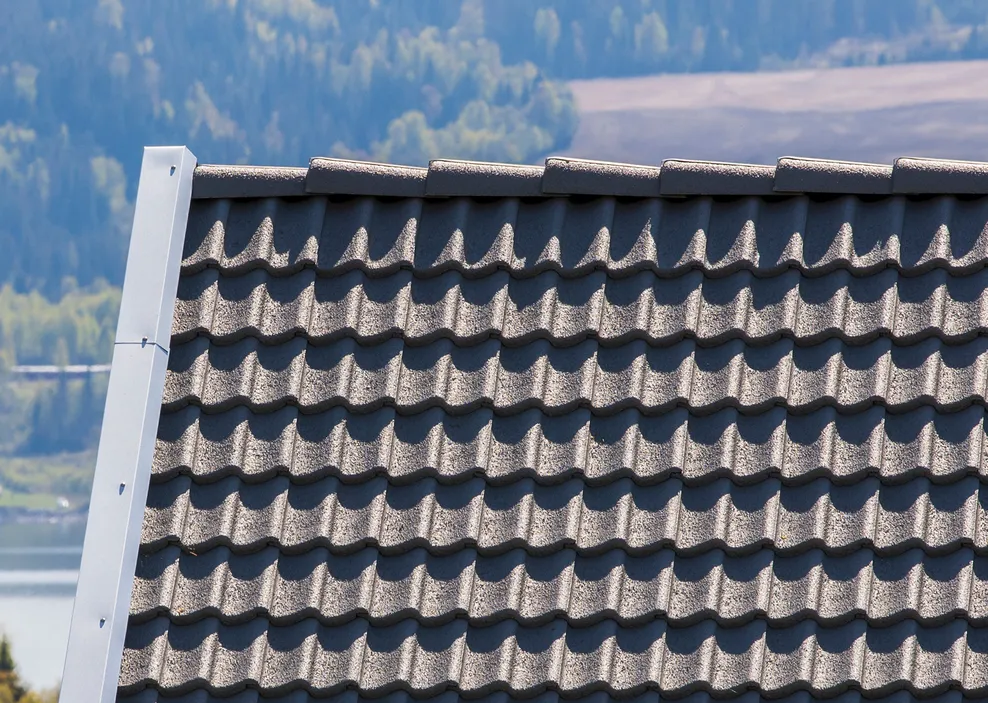
MONIER concrete tiles are manufactured from a combination of concrete, cement, sand, and aggregates to create a durable roofing solution designed for long-term performance. Each tile weighs approximately 4.5 kg and covers around 11.3 tiles per sqm. Their weight is comparable to MONIER clay tiles, which weigh approximately 4.11 kg per tile, making both options suitable for pitched roof applications with proper structural considerations.
The minimum roof pitch for MONIER concrete tiles is 15 degrees. Below this threshold, water drainage becomes insufficient for the tile geometry and the system is not specified for use. If your roof pitch is below 15 degrees, a flat roofing system is the appropriate solution.
The Real Benefits of Concrete Roofs in Malaysia
- Designed for long-term durability with a 50-plus year service life under suitable conditions and proper maintenance
- Strong acoustic performance that helps reduce rain noise in residential environments
- High thermal mass that contributes to more stable indoor temperatures as part of a properly designed roof system
- Wind uplift resistance tested up to 290 km/h under specified installation conditions
- Carbon footprint of 5.6 tCO2 per 100 sqm, based on Curtin University research
- Compatible with solar panel integration across various residential roof configurations
- Individual tile systems can support localized access and replacement during roof maintenance or repair work
The Real Drawbacks of Concrete Roofs in Malaysia
Every material has trade-offs. Here are the ones that matter for concrete tiles:
Higher Upfront Cost
A MONIER concrete tile re-roof on a 210 sqm home costs approximately RM 40,330 fully installed. While the initial investment may be higher, a MONIER concrete tile roofing system is designed for long-term service life and reliable performance under Malaysian conditions. Its durable material properties help reduce the need for frequent maintenance related to corrosion and weather exposure, providing better long-term value throughout the roof’s lifespan.
Minimum Pitch Requirement
Concrete tiles require a minimum 15-degree pitch. If your roof is below this, you need a flat roofing system, not concrete tiles. This is a structural constraint, not a brand decision.
Weight Requires Correct Structural Support
At approximately 45.4 kg per sqm, concrete tiles require a roof structure with sufficient load capacity to support the system. Before installation, the existing roof structure should be assessed to ensure it is suitable for the selected roofing specification. Most standard Malaysian timber truss systems are designed to accommodate tile roofing loads, but older structures may require additional reinforcement to battens or purlins. A BumbungCare assessment can help confirm the appropriate requirements before installation begins.
What Does Concrete Roof Installation Involve?
A properly installed MONIER concrete tile roof is a complete system, not just tiles placed on a frame. Installation involves:
- Structural assessment of trusses, battens, and purlins for load capacity
- Installation of approved underlay across the full roof surface
- Batten installation at the correct spacing for the specific tile profile
- Tile laying following the interlocking pattern specified for the product
- Ridge, hip, and verge capping installed with appropriate fixings
- Final inspection against the MONIER system specification
A RoofPro-certified MONIER installer follows this specification exactly. They are trained and assessed by MONIER and are eligible to issue the Roof System Guarantee (RSG) on completion. Installation quality can vary when roofing systems are installed without manufacturer-certified training or system-based installation standards, which may affect long-term performance and warranty eligibility.
Get the Right Assessment Before You Commit
Concrete tiles are commonly specified for Malaysian homes with roof pitches above 15 degrees and structures designed to support tile roofing systems. But confirming that requires someone on your roof, not a brochure.
MONIER's BumbungCare program provides a free roof audit that assesses your structure, confirms the right system for your home, and connects you with a RoofPro-certified installer in your area. Call 1800 88 0865 or visit BMI Group Website to arrange your assessment.
Frequently Asked Questions
Are concrete roofs good for Malaysia's climate?
Yes. MONIER concrete tiles are engineered for tropical conditions. Their material mass contributes to thermal performance, while the complete roof build-up, including ventilation, underlay, ceiling insulation, and installation quality, also plays an important role in indoor comfort. MONIER concrete tiles are additionally designed for strong wind resistance, acoustic performance, and long-term durability under Malaysian conditions.
What is the minimum pitch for concrete tiles in Malaysia?
MONIER concrete tiles require a minimum roof pitch of 15 degrees. Below this threshold, the tile geometry does not provide adequate water drainage and the system is not specified for use. Flat roofing systems are the appropriate solution for pitches below 15 degrees.
How much does a concrete tile roof cost in Malaysia?
A full MONIER concrete tile re-roof for a 210 sqm home costs approximately RM 40,330 fully installed, including trusses, underlay, tiles, components, and RoofPro-certified labour. For an 89 sqm terrace, the figure is approximately RM 10,437. These figures are indicative full-system estimates and may vary depending on roof design, material selection, site conditions, access requirements, and project scope.
Do I need a structural assessment before installing concrete tiles?
Yes. A structural assessment is recommended before installing concrete tiles to ensure the existing roof structure is suitable to support the roofing system. Concrete tiles weigh approximately 45.4 kg per sqm, so factors such as the condition of the existing structure, trusses, battens, and supporting components should be evaluated before installation. A BumbungCare advisor can help confirm whether any reinforcement is required to ensure a safe and reliable roofing system.
What is a RoofPro-certified installer?
RoofPro is MONIER's installer certification program. Certified installers are trained to install the MONIER system to a defined specification and are eligible to issue the Roof System Guarantee to homeowners. Using a RoofPro installer is the only way to receive a written performance guarantee on your concrete tile roof.