Our countries


Europe
 Austria | Österreich
 Belgium | BelgiqueBelgium | België
 Bulgaria | България
 Croatia | Hrvatska
 Czechia | Česko
 Denmark | Danmark
 Estonia | Eesti
 Finland | Suomi
 France
 Germany | Deutschland
 Hungary | Magyarország
 Ireland | Éire
 Italy | Italia
 Latvia | Latvija
 Lithuania | Lietuva
 Netherlands | Nederland
 Norway | Norge
 Poland | Polska
 Portugal
 Romania | România
 Slovakia | Slovensko
 Slovenia | Slovenija
 Spain | España
 Sweden | Sverige
 Switzerland | SchweizSwitzerland | Suisse
 Turkey | Türkiye
 United Kingdom
Search
Concrete or Clay Roof Tiles: Which One Is Right for Your Home?
Share:
Concrete or Clay Roof Tiles: Which Is Better for You?
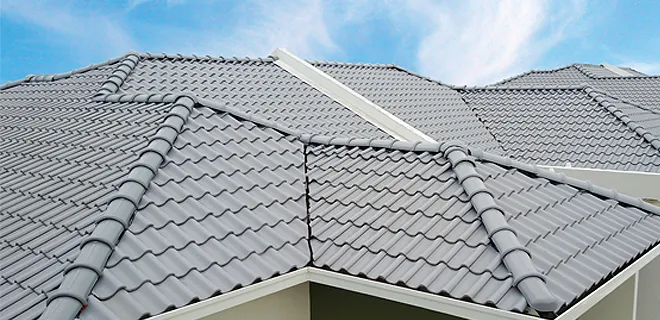
You have narrowed it down to two options: concrete or clay roof tiles. Both are widely used in Malaysian residential projects, but each offers different advantages depending on the building type, roof structure, budget priorities, and long-term performance requirements.
The challenge is not simply choosing between two roofing materials. It is selecting a roof system that aligns with your project needs, structural considerations, climate conditions, and long-term maintenance expectations. While concrete and clay tiles perform similarly in many areas, there are important differences in weight, appearance, thermal characteristics, lifespan, and installation considerations that can influence the overall outcome of a project.
This guide compares concrete and clay roof tiles across the factors that homeowners, architects, and developers commonly evaluate in Malaysia, helping you determine which option is more suitable for your specific application.
The Short Answer: What Each Tile Is Best For
Concrete tiles are a strong all-round choice for most residential re-roofing and new-build projects in Malaysia. They work from a lower minimum pitch, offer a more cost-efficient upfront investment, and can deliver 50 years or more of service life with minimal maintenance.
Clay tiles are often preferred when long-term durability is a priority, when the building has heritage or cultural significance, or when the architectural design requires the distinctive aesthetic of natural kiln-fired clay. With proper installation and maintenance, clay roof tiles can deliver exceptionally long service life that may extend beyond 100 years in suitable conditions.
Both MONIER® concrete and clay roof tiles are designed to perform well in Malaysia's tropical climate. The right choice depends on your building rather than one material being universally better than the other.
Side-by-Side: Concrete or Clay Roof Tiles
Here is how MONIER® concrete tiles (MONIER® Perspective) and MONIER® clay tiles (MONIER® Logica Plana) compare across the specifications that matter most.
Category | Concrete Tiles | Clay Tiles (MONIER® S-Pantile) |
|---|---|---|
Material | Concrete, cement, sand, aggregates | Natural clay, kiln-fired |
Weight | 4.5 kg per tile / 45.4 kg per sqm | 3.85 kg per tile / 48.1 kg per sqm (12.5 tiles/sqm × 3.85 kg) |
Min Roof Pitch | 15 degrees | 20 degrees |
Wind Resistance | Up to 290 km/h | Up to 290 km/h* |
Carbon Footprint | 5.6 tCO2 per 100 sqm | 4.4 tCO2 per 100 sqm (40% lower, air cured) |
Where Concrete and Clay Tiles Perform the Same
Before getting into the differences, it helps to know where these two materials are genuinely equal. This rules out a lot of bad reasons people use to choose one over the other.
- Wind resistance: Both resist wind uplift up to 290 km/h. In a tropical storm, neither fails before the other.
- Sound insulation: Both carry excellent built-in soundproofing. Concrete delivers 51 dB. Clay delivers 48 dB. Either way, heavy rain stays outside where it belongs.
- Rust: Both are rust-free for life. No coating schedules, no corrosion risk. They are not metal.
- Heat management: Both have high thermal mass that naturally stabilizes indoor temperature without add-on insulation.
- Solar: Both are compatible with solar panel installations and do not affect solar output.
- Waterproofing: Both have a low water leakage risk when installed correctly, making installation quality the bigger variable.
Key Considerations When Choosing Between Concrete & Clay Roof Tiles
While concrete and clay roof tiles share many performance benefits, each has characteristics that may make it more suitable for certain projects.
Factors such as roof pitch, design preferences, sustainability goals, and long-term project requirements can all influence the most appropriate choice.
1. Lifespan
Concrete tiles are designed for 50 or more years. That is longer than most people will stay in one home. Clay tiles are designed for over 100 years. That is a generational asset, not just a roofing material.
For most homeowners, 50-plus years is enough. For heritage buildings, houses of worship, and institutional projects where authenticity and longevity must outlast ownership changes, clay is the only material that makes the argument with data behind it.
2. Minimum Roof Pitch
This is where the choice is sometimes made for you. Concrete tiles work from 15 degrees. Clay tiles require a minimum of 25 degrees, though this varies by design.
If your existing roof structure sits at 18 degrees, clay is out regardless of how much you prefer it aesthetically. A proper roof assessment before you commit to a material will tell you this in five minutes. BumbungCare does exactly that.
3. Carbon Footprint
Clay tiles carry a carbon footprint of 4.4 tCO2 per 100 sqm, compared to approximately 5.6 tCO2 per 100 sqm for concrete tiles. The difference is influenced by the manufacturing process, where clay tiles are kiln-fired while concrete tiles are cured during production.
Both still sit well below metal roofing at 9.85 tCO2 per 100 sqm. If your project has Green Building Index (GBI) targets or strong ESG requirements, clay has the edge on paper. For most homeowners, the difference is a consideration rather than a deciding factor.
4. Aesthetics and Building Type
Concrete tiles offer a wide range of design options suited to modern and contemporary residential architecture. They are repositioned by MONIER® as a design-relevant, climate-responsive choice, not just a functional one.
Clay tiles carry a different kind of authority. The texture, colour variation, and material origin of kiln-fired clay are things you cannot replicate in concrete. For heritage buildings, places of worship, and conservation projects, regulators and heritage bodies often specify clay as a non-substitute material. It is not a style preference in those contexts. It is a requirement.
Which One Should You Actually Choose?
Choose MONIER® concrete tiles if:
- Your roof pitch is between 15 and 24 degrees
- You are re-roofing a residential home or landed property
- Budget over a 10 to 15 year horizon matters more than absolute maximum lifespan
- You want a wide range of modern design options
- You are planning to install solar panels and want a thermally stable base
Choose MONIER® clay tiles if:
- Your roof pitch is 25 degrees or above
- The building is a heritage property, house of worship, or institutional project
- You or your client requires authentic natural materials that cannot be substituted
- You are specifying for a conservation or preservation project with regulatory requirements
- Long-term asset value and 100-plus year durability are primary criteria
Not Sure? Get a Proper Assessment First
The wrong tile on the wrong roof structure costs more to fix than it would have cost to get the right advice before starting. MONIER® BumbungCare consultation connects you with trained advisors who will look at your actual roof pitch, your home's structure, and your budget before recommending anything.
If you want to see both tiles in person before deciding, MONIER® Experience Centre in Bukit Kemuning is open for visits. You can see the materials, ask technical questions, and leave with a clear picture of what your roof actually needs.
BMI Malaysia has been in this market for over 73 years. MONIER® has a long-standing presence and major market share in Malaysia’s pitched roofing market. Backed by decades of roofing experience in Malaysia, MONIER® supports homeowners, developers, and roofing professionals with proven roof tile systems, technical expertise, and certified installation support.
Call BumbungCare on 1800 88 0865 or visit BMI Group to get started.
Frequently Asked Questions
Is concrete or clay roof tile better for Malaysian weather?
Both perform well in Malaysia's tropical climate. Concrete and clay tiles have similar wind resistance (up to 290 km/h), similar thermal mass, and similar waterproofing performance when installed correctly. The main differences are lifespan, minimum roof pitch, and carbon footprint. For most residential homes, concrete is the practical choice. For heritage and long-life applications, clay is the better fit.
Can I use clay tiles on any roof pitch?
MONIER® clay tiles require a minimum roof pitch of 25 degrees, though this varies by design. If your roof sits below this threshold, concrete tiles, which work from 15 degrees, are the appropriate choice. A BumbungCare roof assessment will confirm your pitch and the right material for your structure.
Which tile has a lower carbon footprint, concrete or clay?
MONIER® clay tiles carry a carbon footprint of 4.4 tCO2 per 100 sqm, roughly 40% lower than concrete tiles at 5.6 tCO2 per 100 sqm. This is because clay tiles are air-cured. Both materials still have significantly lower carbon footprints than metal roofing, which sits at 9.85 tCO2 per 100 sqm.
Are MONIER® clay tiles only for heritage buildings?
No, but heritage, institutional, and conservation projects are where clay tiles are most often specified as a non-substitute material. MONIER® clay tiles are also used in high-end residential projects where the aesthetic, material authenticity, and 100-plus year lifespan justify the investment. Contact BumbungCare or visit the Experience Centre in Bukit Kemuning to see the clay tile range in person.