Our countries


Europe
 Austria | Österreich
 Belgium | BelgiqueBelgium | België
 Bulgaria | България
 Croatia | Hrvatska
 Czechia | Česko
 Denmark | Danmark
 Estonia | Eesti
 Finland | Suomi
 France
 Germany | Deutschland
 Hungary | Magyarország
 Ireland | Éire
 Italy | Italia
 Latvia | Latvija
 Lithuania | Lietuva
 Netherlands | Nederland
 Norway | Norge
 Poland | Polska
 Portugal
 Romania | România
 Slovakia | Slovensko
 Slovenia | Slovenija
 Spain | España
 Sweden | Sverige
 Switzerland | SchweizSwitzerland | Suisse
 Turkey | Türkiye
 United Kingdom
Search
Clay Roof Tiles in Malaysia: The Case for the Longest-Lasting Roofing Material
Share:
Clay Roof Tiles: Best Choice for Long-Lasting Roofs in Malaysia
Most roofing decisions are made on a 20 to 30 year horizon. Clay tile roofing is often selected with a much longer-term perspective in mind, particularly for heritage properties, architecturally distinctive homes, and high-value residential projects where long-term durability, material character, and timeless aesthetics are important considerations.
This article is for homeowners, architects, and project specifiers who want to understand when clay roof tiles are the right choice, how the material performs across durability, thermal performance, sustainability, and long-term roofing considerations, and what they cost against alternatives.
What Are Clay Roof Tiles Made Of?
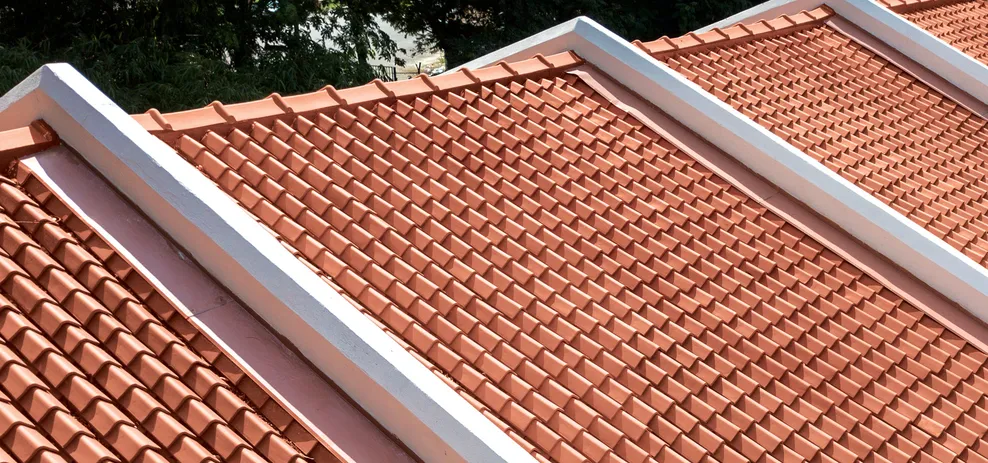
MONIER® clay tiles are kiln-fired from natural clay. Each tile weighs approximately 4.11 kg, covering around 10.5 to 11 tiles per sqm. The use of natural clay materials and long-lasting material performance contributes to the product’s overall sustainability profile and low lifecycle environmental impact.
Clay tiles are not a manufactured composite. They are a natural material shaped and fired to a precise geometry. This is partly why they last so long. Clay roof tiles are manufactured from natural clay and kiln-fired for durability and dimensional stability. Their long-term performance is supported by the material’s inherent weather resistance and low reliance on corrosion-related protective systems.
How Long Do Clay Roof Tiles Last in Malaysia?
MONIER® clay tiles are designed for a service life of over 100 years under suitable installation and conditions, making them a premium long-life roofing option commonly specified for heritage, architectural, and high-value residential projects in Malaysia. By comparison, concrete tiles typically last 50 years or more, while metal roofing ranges depending on material type and maintenance.
In practice, clay tile roofs on pre-war shophouses and colonial-era buildings in Malaysia are still performing structurally after 80 to 100 years with only periodic maintenance. The material is valued for its durability, natural weather resistance, and long-term performance characteristics under tropical conditions when properly installed and maintained.
Clay Tile Performance Specifications: What the Data Shows
- Wind uplift resistance: up to 290 km/h
- Water resistance: Designed to support effective water shedding as part of a properly installed roofing system
- Soundproofing: 48 dB built-in sound insulation
- Carbon footprint: 4.4 tCO2 per 100 sqm based on available product lifecycle research
- Thermal performance: The material’s thermal mass contributes to more stable indoor temperatures as part of a complete roof build-up
- Rust: Not applicable. No metal content
The carbon footprint figure of 4.4 tCO2e per 100 sqm for MONIER® clay tiles is based on publicly available lifecycle assessment research by Curtin University. This data provides measurable information on the embodied carbon impact of clay tile roofing and can support sustainability evaluations for projects considering environmental performance and green building requirements.
When Is Clay the Right Choice Over Concrete?
Clay tiles are commonly specified when:
- Your roof pitch is 25 degrees or above. Clay tiles require a minimum pitch of 25 degrees, varying by design
- The building is a heritage property, house of worship, or culturally significant structure where authenticity is important, or when homeowners want to achieve a more traditional and timeless look.
- Regulators, heritage bodies, or conservation authorities specify clay as a non-substitute material
- Long-term durability and material longevity are key project priorities
- ESG reporting or Green Building Index credentials are a project requirement
See MONIER® Clay Tiles in Person
If you are specifying clay tiles for a project, visiting MONIER® Experience Centre in Bukit Kemuning gives you direct access to the material range and a technical consultation before you commit.
For a project-specific assessment, BumbungCare connects you with a MONIER® advisor who will confirm roof pitch suitability, recommend the right clay tile design for your building, and connect you with a RoofPro-certified installer. Call 1800 88 0865 or visit BMI Group Website.
Frequently Asked Questions
How long dHow long do clay roof tiles last in Malaysia?
MONIER® clay roof tiles are designed for over 100 years of service, making them a premium long-life roofing option for residential, heritage, and architectural projects. They are kiln-fired natural clay tiles with strong long-term weather resistance and rust-free material properties. Like all roofing systems, periodic inspection and appropriate maintenance are still recommended over the roof’s service life.
Are clay tiles more expensive than concrete tiles?
Yes, clay tiles carry a higher upfront cost than concrete tiles. However, with a design life exceeding 100 years against concrete's 50-plus years, the long-term value proposition may be favourable for projects prioritising extended service life and architectural durability. For heritage and institutional projects where clay is specified as a non-substitute material, the comparison to concrete is less relevant than the comparison to the cost of periodic replacement.
What is the carbon footprint of MONIER® clay tiles?
MONIER® clay tiles carry a carbon footprint of 4.4 tCO2 per 100 sqm based on available lifecycle assessment data. This reflects the environmental impact of clay tile roofing throughout its lifecycle, considering factors such as material composition, durability, service life, and long-term performance.