Our countries


Europe
 Austria | Österreich
 Belgium | BelgiqueBelgium | België
 Bulgaria | България
 Croatia | Hrvatska
 Czechia | Česko
 Denmark | Danmark
 Estonia | Eesti
 Finland | Suomi
 France
 Germany | Deutschland
 Hungary | Magyarország
 Ireland | Éire
 Italy | Italia
 Latvia | Latvija
 Lithuania | Lietuva
 Netherlands | Nederland
 Norway | Norge
 Poland | Polska
 Portugal
 Romania | România
 Slovakia | Slovensko
 Slovenia | Slovenija
 Spain | España
 Sweden | Sverige
 Switzerland | SchweizSwitzerland | Suisse
 Turkey | Türkiye
 United Kingdom
Search
Best Roof Tile Colours for Double-Storey Homes in Malaysia
Share:
Best Roof Tile Colours for Double-Storey Homes in Malaysia | BMI Malaysia
Choosing the right roof tile colour for a double-storey home can make a noticeable difference to the overall appearance of the property. Because the roof forms a significant part of the exterior, its colour needs to work with the wall finish, architectural style and surrounding environment.
Rather than following a particular colour trend, it is more useful to consider how different colour families work with the design of the house.
This guide provides practical design guidance for comparing roof tile colours, matching them with exterior finishes and considering thermal performance before making a final selection.
How Double-Storey Home Design Affects Colour Choice
On a double-storey home, the roof can be a prominent part of the street-facing elevation. The colour selected can therefore influence how visually strong or subtle the roof appears within the overall façade.
As a general design consideration:
- Darker tile colours can give the roof greater visual definition and create stronger contrast with lighter exterior walls.
- Lighter tile colours can make the roof appear less visually dominant, allowing other elements such as the walls, windows and architectural details to stand out.
The effect will vary according to the roof pitch, house proportions, exterior colours and amount of roof surface visible from street level.
Roof Tile Colour Families to Consider
There is no single “best” roof tile colour for every double-storey home. The following colour families offer different design possibilities depending on the architecture and exterior palette of the property.
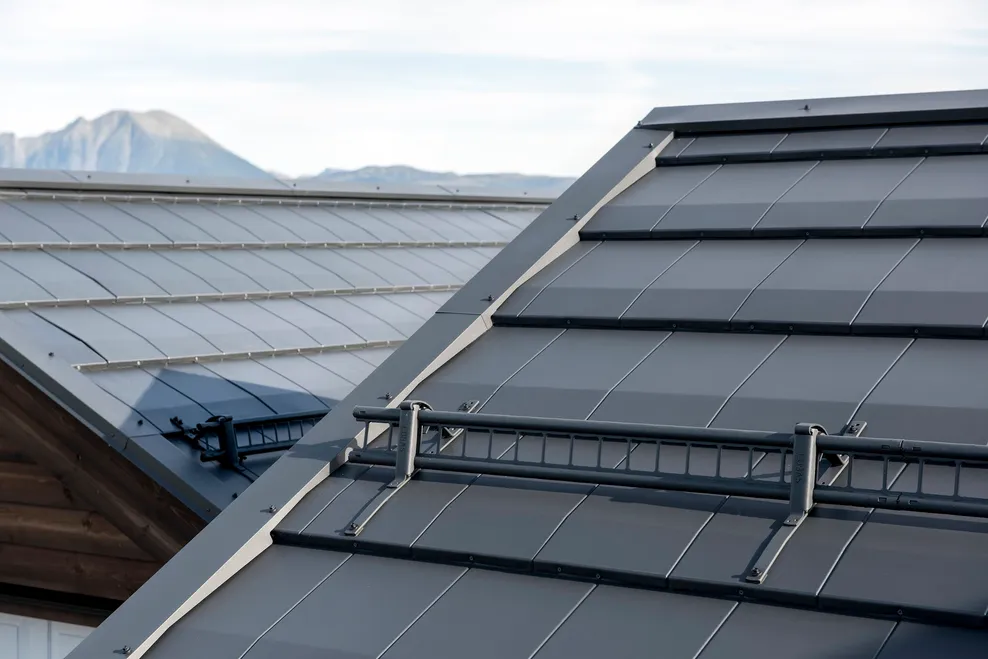
Greys: Slate, Charcoal and Mid-Grey
Grey is a versatile option for contemporary homes because it can be paired with a wide range of neutral exterior finishes.
Charcoal and darker greys can create stronger contrast against white, cream or pale façades, while mid-grey and slate tones provide a softer transition between the roof and exterior walls.
For a home with a restrained or neutral colour palette, grey can help maintain a clean and cohesive appearance without making the roof the dominant design feature.
Terracotta and Burnt Orange
Terracotta and burnt-orange roof tiles bring warmer tones to the exterior and can complement cream, beige and other warm wall finishes.
These colours can also suit homes that draw inspiration from traditional, tropical or heritage architectural styles, particularly where warm natural materials and earthy exterior colours form part of the design.
The final effect depends strongly on the tile profile. A terracotta clay tile with natural surface variation, for example, can create a different visual character from a more uniform concrete tile in a similar colour family.
Deep Browns and Earthy Tones
Dark brown and earthy roof colours can work particularly well with brick finishes, textured render and exterior details using timber-inspired or other warm natural tones.
Rather than creating a strong contrast between the roof and walls, these colours can be used to develop a more cohesive exterior palette.
For homes surrounded by substantial landscaping, brown and earthy tones can also help connect the roof visually with the natural colours around the property.
Near-Black and Charcoal
Near-black and deep charcoal roof tiles can create a strong, defined roof line, particularly when paired with white, light grey or other pale façades.
This high-contrast approach can suit contemporary double-storey homes where the roof is intended to form a clear part of the architectural composition.
However, colour should not be considered only from an aesthetic perspective. Dark and light roof surfaces can respond differently to solar radiation, so the thermal properties of the actual roofing product and complete roof system should also be considered.
Light Grey and Off-White
Light grey and off-white roof colours can create a softer contrast with pale exterior walls and may suit homes with a lighter, more minimal exterior palette.
They can also reduce the visual weight of the roof, which may be useful where a large roof area is visible from street level.
From a thermal perspective, the solar reflectance of the actual roof surface is more important than the colour name alone. under Malaysian climatic conditions found that surfaces with higher solar reflectance can help reduce roof surface temperature and cooling load.
Practical Colour Selection Principles
Match the Wall Finish
Start with the dominant exterior wall colour and consider whether the overall palette is warm, cool or neutral.
Warm wall colours such as cream, beige and sandy tones can be paired with terracotta, earthy brown or warmer grey roof tiles.
White, light grey and other cooler or neutral façades can work with slate grey, charcoal, near-black or lighter grey roof colours.
These combinations should be treated as design guidance rather than fixed rules. The architecture, materials and desired contrast of the individual home should guide the final decision.
Consider How Much of the Roof Is Visible
Roof pitch, overhang and viewing angle affect how much of the tile surface can be seen from ground level.
A colour that appears relatively light on a small sample may look different once installed across a large roof area or viewed partly in shadow.
When comparing options, consider how the colour will appear from the street and other common viewing positions around the property.
Check the Neighbourhood Context
The surrounding neighbourhood can also provide useful design context.
Look at the roof and exterior colour combinations of nearby homes, particularly where the development has an established architectural character or specific design requirements.
The goal does not have to be an exact match. A roof colour can still give the home its own character while remaining visually compatible with its surroundings.
Compare Physical Samples
Colour can look different depending on natural light, surrounding wall colours, tile texture and viewing distance.
Where possible, compare physical tile samples under both direct sunlight and shade before making the final selection. This gives a more realistic indication of how the colour and surface finish will work with the exterior of the home.
Conclusion
Choosing roof tile colours for a Malaysian double-storey home is primarily a design decision, but the final choice should also consider the architecture of the house, exterior finishes, surrounding environment and thermal performance of the roof system.
Grey, charcoal, terracotta, earthy brown, near-black and lighter neutral tones can each create a different architectural effect. Rather than selecting a colour because it is considered popular or currently trending, focus on how it works with the specific design of the home.
Physical samples can also help homeowners compare how different colours and finishes look under actual lighting conditions before making a decision.
Contact BumbungCare for guidance on suitable MONIER® roof tile options for your home.